


 English
 عربى
عربىNews

500ml vs 750ml vs 1L Straw Plastic Water Bottle Guide
A Straw Plastic Water Bottle has a built‑in drinking tube. The user lifts the straw to the mouth and drinks without tilting the bottle. This design matters during movement. Definition of Straw Plastic Water Bottle: a container made of plastic with a straw mechanism integrated into the lid. The straw draws water from the bottom of the bottle. A bite valve or push‑pull cap controls flow. How straw mechanism improves hydration convenience: during exercise, tilting a head back to drink from a regular bottle disrupts breathing and form. A straw allows the head to stay forward. The user drinks in a natural position. One‑handed drinking advantage during sports: a runner can keep one hand free. A cyclist can sip without stopping. A gym user can hold a weight in one hand and drink with the other. Straw systems enable this efficiency. Leak‑proof and portability features: many straw bottles include a lock on the mouthpiece. When locked, the bottle does not leak inside a bag. This feature adds convenience for daily carry. Why it is widely used in fitness and outdoor activities: the combination of easy drinking, leak resistance, and lightweight plastic makes straw bottles a common choice among active people.
Why Bottle Capacity Matters for Sports and Daily Hydration
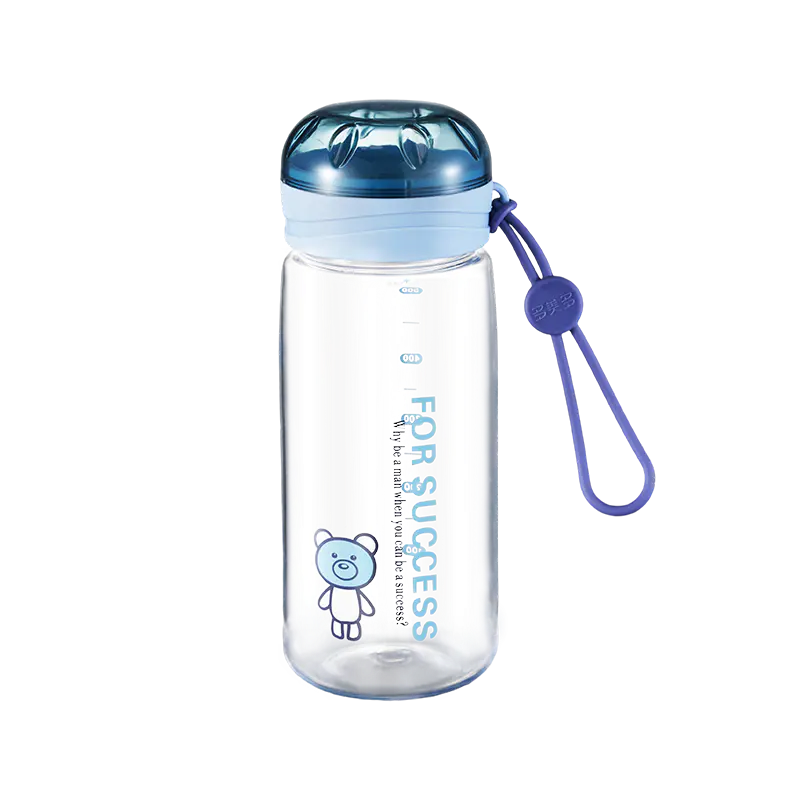
Capacity determines how long a user can go between refills. A small bottle needs frequent stops. A large bottle adds weight and bulk.
Relationship between capacity and hydration frequency: a person who sweats heavily during a one‑hour workout may need 500ml or more. Someone doing a short walk may only need 300ml. Matching capacity to sweat rate prevents under‑ or over‑hydration.
Impact of bottle size on mobility and comfort: a 1L bottle fits poorly in a small gym bag. It feels heavy in a hand during a run. A 500ml bottle fits in a bike cage or treadmill holder easily.
Trade‑off between weight and convenience: every extra milliliter adds weight. A full 1L bottle weighs twice as much as a 500ml bottle. For a short session, the extra weight is unnecessary. For a long hike, the extra water is worth the weight.
Role of activity duration in capacity selection: a thirty‑minute session needs less water than a two‑hour session. A user should estimate typical workout length and choose capacity accordingly.
Influence of environment: hot weather increases sweat rate. A larger bottle becomes necessary. Cold weather reduces thirst, but hydration still matters. Environment changes the same capacity's sufficiency.
500ml vs 750ml vs 1L — Core Comparison of Sports Water Bottle Capacities
Each size serves a different range of activities. Understanding the trade‑offs helps a buyer decide.
| Capacity | Weight When Full | Best For | Main Limitation |
|---|---|---|---|
| 500ml | Light, easy to carry | Short workouts, running, gym | Frequent refills needed |
| 750ml | Moderate, balanced | Medium sessions, general fitness | May not fit small bottle cages |
| 1L | Heavy, bulky | Long hikes, all-day activities | Too heavy for high-mobility sports |
500ml: lightweight, highly portable, frequent refill needs. This size works for a one‑hour gym session or a five‑kilometer run. The user can carry it in a small bag or hold it without fatigue. Refilling once or twice during a long session may be required.
750ml: balanced option for general fitness use. This capacity covers most indoor workouts and medium outdoor activities. A 750ml bottle fits many standard bike cages. It provides enough water for ninety minutes of moderate activity without being too heavy.
1L: extended hydration, reduced refill frequency, heavier load. This size suits hikes longer than two hours, full‑day events, or very hot conditions. The user carries more weight but stops less often to find water sources. For gym use, a 1L bottle may feel excessive.
Best Bottle Capacity for Gym Workouts
Short gym sessions differ from long training days. A person lifting weights for forty minutes needs less water than someone doing two hours of mixed cardio and strength training.
Weight training vs cardio hydration needs: lifting heavy weights produces bursts of effort with rest between sets. The body loses water through sweat but at a moderate rate. A 500ml bottle usually suffices for a weight session. Cardio work like running on a treadmill or using an elliptical machine increases sweat rate. A 750ml bottle becomes more appropriate for cardio sessions longer than forty minutes.
Ease of handling during exercises: a large bottle rolls off the treadmill. A small bottle fits in a water bottle holder attached to equipment. Mid‑size bottles between 500ml and 750ml offer the handling advantage without excess bulk.
Recommended capacity based on workout intensity: for moderate intensity (breathing hard but able to speak), 500ml per hour works. For high intensity (unable to speak full sentences), 750ml to 1L per hour may be needed. A gym goer should observe personal thirst signals across a few sessions.
Why mid‑size bottles are commonly preferred: 600ml to 750ml bottles appear frequently in gym settings. They provide enough water for a typical one‑hour session. They fit in lockers. They do not overwhelm a small gym bag.
Best Bottle Capacity for Running, Cycling, and Outdoor Sports
High‑mobility sports demand lightweight equipment. Every extra gram feels heavier after miles of movement.
Running: lightweight priority considerations. A runner carries the bottle in hand, a belt, or a vest. A 500ml bottle is common for runs up to ten kilometers. For longer distances, runners often use two smaller bottles or a hydration vest rather than one large bottle.
Cycling: balance between capacity and bottle holder fit. Road bike cages accept standard bottle diameters. A 750ml bottle is the typical maximum for many cages. Larger bottles may not fit or may fall out on rough roads. A cyclist can carry two bottles for longer rides.
Hiking and outdoor sports: extended hydration needs. A hiker on a three‑hour trail needs more water than a runner. A 1L bottle or two 750ml bottles serve well. The hiker carries the weight in a backpack, reducing direct arm fatigue.
Movement efficiency vs hydration availability: a runner who stops to refill a small bottle every twenty minutes loses rhythm. A cyclist who reaches for a poorly placed large bottle risks balance. The right capacity balances fewer stops with comfortable carry.
Environmental temperature influence: hot summer days increase sweat rate. A size that works in spring may be too small in summer. Users should consider seasonal changes when choosing a primary bottle.
Best Bottle Capacity for Daily Use and Office Hydration
Sports bottles also serve daily hydration. Office workers and commuters have different needs.
Desk hydration behavior patterns: a person at a desk drinks small amounts frequently. A 750ml or 1L bottle on the desk acts as a visual reminder. Refilling happens once or twice per day.
Frequency of refilling in office environments: a 500ml bottle requires a trip to the water cooler every hour or two. A 1L bottle may last through the morning. Less interruption means more focus on work.
Portability for commuting: a bottle carried in a work bag must not leak. A slim 500ml bottle fits in side pockets. A 1L bottle takes up more space. Commuters often prefer smaller bottles for train or bus travel.
Psychological effect of visible hydration reminder: a large bottle on a desk signals the need to drink. Some users find a 1L bottle intimidating. Others appreciate the prompt. Personal preference matters.
Convenience vs storage space: a small refrigerator at work may not fit a 1L bottle. A desk drawer may not close with a large bottle inside. Office users should measure available space before choosing capacity.
Features That Matter Beyond Capacity
A Straw Plastic Water Bottle requires more than the right size. Other features affect daily satisfaction.
Straw design and drinking flow efficiency: some straws deliver a steady stream. Others require hard sucking. A user should test the straw before committing to a bottle.
Leak‑proof locking systems: a bottle that leaks in a bag ruins work documents or gym clothes. A locking mechanism on the mouthpiece prevents leaks.
Material safety and durability: plastic bottles should not contain harmful chemicals. A durable bottle survives drops on concrete floors.
Grip design for sports usage: sweaty hands need texture on the bottle surface. A smooth bottle slips during a run.
Ease of cleaning: straws collect residue. A bottle with a removable straw and wide mouth cleans more easily.
Mouthpiece comfort and hygiene: a hard plastic mouthpiece feels different from silicone. A covered mouthpiece stays cleaner in a gym bag.
Final Decision Guide for Choosing the Best Straw Plastic Water Bottle Capacity
A buyer should match capacity to the most common activity. Not every workout needs the same bottle.
Matching capacity to workout duration: under one hour, 500ml. One to two hours, 750ml. Over two hours, 1L or more.
Matching capacity to mobility level: high mobility (running, cycling) favors 500ml to 750ml. Low mobility (hiking, desk) can use 1L.
Matching capacity to hydration habits: a heavy sweater needs more capacity. A light sweater can use less.
Combining two bottles for different scenarios: a user can own a 500ml bottle for gym and a 1L bottle for hiking. Different bottles serve different days.
When to prioritize portability over volume: any activity involving running or fast movement benefits from smaller bottles.
When larger capacity becomes necessary: hot weather, long duration, or remote locations with no refill access require 1L or more.
Final checklist before purchase:
- Does the bottle fit in the intended bag or bottle cage?
- Does the weight when full feel comfortable to carry?
- Does the straw mechanism work easily with one hand?
- Can the bottle be cleaned without special tools?
The Right Capacity Improves Hydration Consistency
A well‑chosen water bottle disappears from awareness during use. The user drinks when thirsty without struggle. The bottle does not annoy or get left behind. Capacity choice directly enables that experience. A 500ml bottle suits short, intense efforts. A 750ml bottle covers most gym and daily needs. A 1L bottle supports long adventures and hot conditions. No single size works for every person or every day. A thoughtful buyer considers workout duration, mobility demands, and personal sweat rate. A straw mechanism adds convenience for drinking during movement. The combination of correct capacity and functional straw design makes hydration easier. That ease leads to better drinking habits. Better drinking habits support performance and recovery. For reliable Straw Plastic Water Bottles in various capacities designed for sports and daily use, Taizhou Huangyan Zuohao Plastic Factory provides manufacturing solutions that balance portability, durability, and drinking convenience. Choosing the right partner for bottle production ensures that the final product meets real‑world hydration needs without unnecessary weight or bulk.
Related Products
We specialize in the production and sales of plastic water cups, and also provide customization services
and comprehensive after-sales support.
QUICK LINKS
CONTACT US
- Address:No. 1 Shuangyou Road, Nancheng Street, Huangyan District, Taishan City, Zhejiang Province
- Tel: +86-19957687783
- Email: [email protected]
- Whatsapp: +86-19957687783
MOBILE
Copyright © Taizhou Huangyan Zuohao Plastic Factory.
All Rights Reserved.
