


 English
 عربى
عربىNews

Do Leak-Proof Straw Bottles Really Prevent Water Spills?
A wet bag lining, a soaked notebook, a damp jacket pocket — the consequences of a leaking water bottle are minor in the grand scheme of things, but reliably irritating. The assumption that any sealed container should simply hold its contents without incident turns out to be more complicated than it sounds. A Straw Plastic Water Bottle introduces design variables that a basic screw-cap bottle does not have: a straw channel that passes through the lid, a valve or seal at the drink opening, and a locking mechanism that has to engage cleanly every time. When these elements work together correctly, the result is a bottle that genuinely resists spilling under the conditions of daily use. When they do not, the straw design that makes drinking convenient also creates the path through which water escapes.
What Makes a Straw Bottle Different from a Standard Sealed Bottle
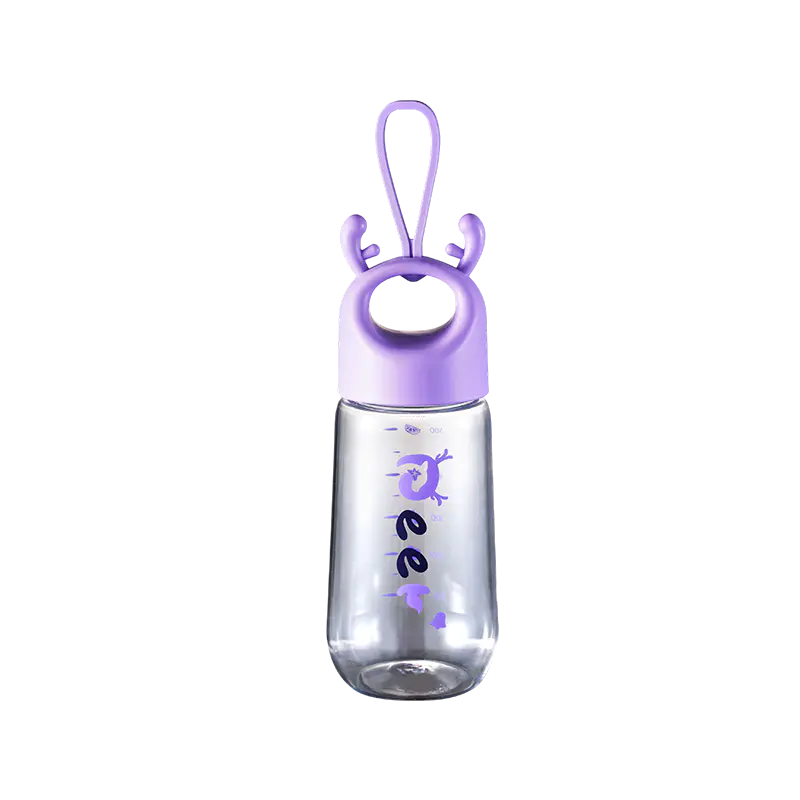
The Lid Design Creates Both the Function and the Risk
A standard screw-cap or push-pull lid seals by creating continuous contact between two surfaces — usually a rubber or silicone gasket pressed against a rim. The leak path is short and the seal geometry is simple. A straw lid is structurally more complex: it must seal around the straw itself, seal the drink spout when not in use, and maintain those seals through repeated opening cycles and variable internal pressure.
This complexity is not a flaw in the design concept. It is just a reality that requires more precise engineering to manage. A well-designed straw lid addresses each of these seal points deliberately. A poorly designed one treats them as secondary considerations and leaks accordingly.
Pressure Dynamics Inside a Closed Bottle
One factor that many users do not think about is what happens to the air inside a sealed bottle as temperature and altitude change. A bottle filled in an air-conditioned office and then carried in a warm car develops internal pressure as the trapped air expands. The same bottle carried in an aircraft hold experiences pressure changes in both directions.
When internal pressure exceeds what the lid seal can contain, liquid finds the path of least resistance — which in a straw bottle is often the straw channel or the drink spout gasket. Bottles designed with pressure equalization features handle this differently from those that rely purely on compression seals.
The Structural Components Behind Leak Prevention
Silicone Sealing Rings: The Foundation of the System
The silicone gasket or O-ring is the component that does most of the work in preventing leakage around the lid perimeter. Silicone is used because it remains flexible across a wide temperature range, creates a reliable compression seal without deforming permanently, and resists the swelling and degradation that affects rubber when exposed to water over time.
In a well-constructed straw bottle, there is typically a gasket seating in the lid-to-body thread or press-fit zone. The gasket has to be:
- Correctly sized for the specific bottle diameter — too loose and it does not seat consistently; too tight and it deforms unevenly
- Made from food-grade silicone that does not take a compression set over time and lose its sealing force
- Seated without folds or gaps that create channels for water to travel through
- Accessible for cleaning and inspection, since a gasket that traps residue eventually provides an inconsistent seal
The Straw Valve: Controlling Flow at the Drink End
Some straw bottle designs incorporate a valve at the base or top of the straw that remains closed under passive pressure and opens only when the user applies suction. This is the mechanism that allows the bottle to be held at an angle, turned upside down, or carried in a bag without the straw becoming a continuous liquid path.
Straw valves are typically made from soft silicone and work through one of two principles:
- Duckbill valve: A small silicone flap that opens flat under negative pressure (suction) and closes under positive pressure or neutral conditions. Reliable and simple, but requires suction force to operate, which can be an issue for young children or users with limited oral strength.
- Bite-activated mouthpiece: A soft silicone tip that remains sealed unless compressed between the teeth, then releases liquid. Very effective at preventing passive dripping but requires a specific drinking action.
Both valve types prevent the straw from acting as an open channel between the bottle interior and the outside when not actively in use.
The Lid Lock Mechanism
Beyond the seals themselves, many straw bottles incorporate a lid lock that prevents the drink spout from being accidentally opened. This is particularly relevant for bottles carried in bags, where pressure from surrounding items can press against the lid and open an unlocked spout.
Lid lock designs vary:
- Rotating lock ring: A collar around the spout that must be turned to align drink and lock positions before the lid will open.
- Side-press button with latch: A button that releases the lid only when deliberately pressed, with a visible latch that shows whether the bottle is locked or unlocked.
- Flip cap with integrated lock: A hinged cap over the straw opening that locks flat against the lid body, preventing the straw from being exposed.
The effectiveness of a lock mechanism depends on whether it engages positively — meaning the user can feel and confirm it has locked — or loosely, in a way that can be undone by incidental pressure.
How Leak-Proof Performance Holds Up in Real-Life Conditions
What Actually Happens Inside a Bag
Carrying a water bottle in a backpack or tote is one of the more demanding real-world tests of leak-proof performance. The bottle is horizontal for extended periods, surrounded by items that press against it from various angles, and subject to the jarring movement of walking, cycling, or transit.
The specific stresses that matter here:
- Horizontal orientation: With the bottle on its side, the liquid surface is in contact with the straw opening and the lid gasket simultaneously. Any gap in either seal allows water to escape by gravity.
- Compression from surrounding items: Books, a laptop, or other bag contents can press against the lid and apply lateral force to the locking mechanism or spout seal.
- Temperature change: A cold bottle carried from an air-conditioned space into warm outdoor conditions develops internal pressure as the air expands. If the seal has any weakness, this pressure reveals it.
A bottle that passes a static upside-down test in a controlled environment may behave differently under the combined stresses of real bag use. The quality of the seal materials and the precision of the lid construction determine whether performance holds in practice.
Children's Use: Where Leak-Proof Claims Get Tested Hardest
Children interact with water bottles in ways that no adult would — dropping them repeatedly, squeezing the body to force liquid out, carrying them at odd angles, and forgetting to engage the lock. For a bottle used by a child at school or during activities, the leak-proof design has to tolerate this kind of unpredictable use without failing.
Key design considerations for children's bottles:
- The lock mechanism should require deliberate effort to disengage but be operable by small hands — a balance that is harder to achieve than it sounds
- The straw valve should not require significant suction force — a duckbill valve with very light opening resistance is generally more appropriate for younger users
- The body material should be impact-resistant enough to survive drops without the body deforming in a way that distorts the lid seal
- Cleaning access must allow the straw and valve to be fully cleaned — residue buildup in a straw valve changes its sealing behavior over time
Sport and Gym Use
During exercise, the demands on a bottle shift. Users want to drink quickly, often with one hand, without stopping activity to engage and disengage a lock mechanism. The bottle gets placed on its side on gym equipment, stuffed into a bottle holder while still slightly open, and handled with sweaty hands.
For sport use, the practical leak-proof requirement is more about reliable passive sealing — the bottle should not leak when not being actively used — while keeping the drinking action fast and accessible. Bite-activated mouthpieces or light duckbill valves with a flip-cap cover tend to serve this context well. A lock mechanism that requires two hands or a specific sequence of movements creates friction that users often skip, defeating the leak prevention.
A Comparison of Lid and Seal Designs by Use Context
| Design Feature | Children Use | Sport Use | Commute or Travel | Desk Use |
|---|---|---|---|---|
| Duckbill straw valve | Suitable with light resistance | Suitable | Suitable | Suitable |
| Bite-activated mouthpiece | Less suitable for younger children | Suitable | Suitable | Less practical |
| Rotating lock ring | Operable but requires dexterity | Slower to operate | Reliable | Reliable |
| Side-press button latch | Suitable | Suitable | Good | Good |
| Flip cap with lock | Suitable | Suitable | Reliable | Reliable |
| Silicone O-ring gasket | Essential in all categories | Essential | Essential | Essential |
| Pressure equalization vent | Helpful for bag carry | Less critical | Helpful | Less critical |
Does Plastic Type Affect Leak-Proof Reliability?
How the Body Material Influences Seal Performance
The plastic used for the bottle body is not just a structural or safety consideration — it affects how the lid seal performs over time. A bottle body that flexes significantly under pressure changes the geometry of the lid-to-body interface, which affects how consistently the gasket seats.
Rigid plastics, such as Tritan or polypropylene, maintain consistent dimensional stability across temperature changes and mechanical stress. This stability matters for seal performance: the gasket is always seating in the same geometry, so the seal behaves predictably. Softer or thinner plastic bodies deform under grip pressure or temperature variation, which can open small gaps in the seal that would not exist in a stiffer material.
BPA-free materials have become the standard across consumer water bottle production, driven by health and safety preferences. BPA-free designation covers a range of plastic formulations — the relevant performance properties for leak prevention are dimensional stability and resistance to deformation, which vary across these formulations and should be evaluated alongside the BPA-free claim rather than assumed from it.
Long-Term Seal Degradation
No seal lasts indefinitely. The silicone components in a straw bottle lid — the gasket, the straw valve, the O-ring around the straw — degrade through repeated mechanical compression, exposure to cleaning agents, and general aging. The timeline for this degradation depends on material quality, use frequency, and cleaning practices.
Signs that seals are reaching the end of their service life:
- The gasket develops a visible compression set — it no longer springs back to its original shape after the lid is opened
- The straw valve requires noticeably more suction force than when new, suggesting the silicone has stiffened
- Small drips appear at the lid perimeter under conditions that previously produced no leakage
- Discoloration or surface cracking visible on the silicone components
In well-designed bottles, the silicone components are replaceable separately from the lid or bottle body — an important consideration for buyers evaluating product longevity.
Cleaning Practices That Protect Long-Term Leak Resistance
Why Cleaning Method Matters for Seal Integrity
A bottle that is not cleaned properly accumulates mineral deposits and biological residue in the straw, valve, and gasket areas. Beyond the hygiene concern, this residue affects seal performance: deposits on a gasket seat prevent even contact; residue inside a straw valve changes the valve's opening and closing behavior; mold growth on silicone surfaces can cause dimensional changes that affect the seal.
Effective cleaning for straw bottle components:
- Use a thin straw cleaning brush to clear the interior of the straw on a regular basis — plain water rinsing does not remove biofilm that builds up on the inner surface
- Remove the lid gasket for separate cleaning — residue trapped under a gasket that cannot be lifted out simply stays there
- Rinse straw valves thoroughly and allow them to dry completely before reassembly — moisture trapped in a duckbill valve invites mold growth in the folds
- Avoid prolonged soaking in strongly alkaline detergents, which can accelerate silicone aging
Dishwasher Compatibility and Its Limits
Many straw bottles are marketed as dishwasher-safe, but the heat and detergent chemistry of a dishwasher cycle affects silicone seals differently from hand washing. High-temperature wash cycles can accelerate the compression set process in gaskets, shortening their effective service life. Detergents with strong degreasing chemistry can extract plasticizers from softer silicone formulations over time.
For bottles where long gasket life is a priority — particularly in children's bottles that will see daily use over an extended period — hand washing with warm water and mild detergent, followed by air drying, is generally less aggressive on seal materials than repeated dishwasher cycles.
Structural Design Choices That Separate Reliable Bottles from Unreliable Ones
The Tolerance Stack-Up Problem
A bottle lid is a system of components, each with its own manufacturing tolerance. The body neck diameter has a tolerance. The lid thread or press-fit has a tolerance. The gasket has a thickness tolerance. When all of these tolerances stack in an unfavorable direction simultaneously — a slightly oversized body neck, a slightly undersized lid, a slightly thin gasket — the result is a seal that looks assembled correctly but leaks.
This tolerance stack-up problem is why nominally identical bottles from different manufacturers can perform very differently in practice. A manufacturer that holds tight tolerances across all components produces consistent seal performance. One that accepts wider tolerance ranges produces results that vary between units.
For wholesale buyers evaluating product quality, requesting samples and subjecting them to practical leak tests — horizontal hold, bag carry simulation, drop from a reasonable height — surfaces tolerance issues that catalog specifications do not reveal.
Straw Length and Angle Relative to Liquid Level
A design detail that affects practical drip behavior is how the straw sits relative to the bottle body when the lid is closed. A straw that is long enough to reach close to the bottom of the bottle means the user can drink down to a low liquid level without tilting. But a straw that is too long for the bottle depth can buckle against the base, creating turbulent flow behavior that some users interpret as the valve malfunctioning.
The angle at which the straw exits the lid also affects dripping behavior when the bottle is tilted. A straw that exits vertically drips differently under tilt than one angled toward the front of the bottle body. These details are apparent in a physical sample review in a way that they are not from a product photograph.
Reliable Hydration That Holds Up Under Real Conditions
The leak-proof claim on a straw bottle is only as meaningful as the engineering behind it. A bottle that seals reliably across horizontal storage, bag carry, temperature variation, repeated drops, and child handling is a different product from one that passes a brief upside-down test over a kitchen sink. The difference lies in the precision of the gasket fit, the quality of the silicone valve, the strength of the lid lock engagement, and the dimensional stability of the plastic body — none of which are visible from the outside and all of which determine whether the product actually works as described in daily use. For buyers sourcing Straw Plastic Water Bottle products for retail, wholesale distribution, or private label programs, these structural details are worth examining in physical samples before committing to volume. Taizhou Huangyan Zuohao Plastic Factory manufactures Straw Plastic Water Bottles and related hydration products, with production capacity across a range of lid configurations, body materials, and volume specifications for wholesale and OEM supply. Reaching out directly to discuss product specifications, seal design details, or sample evaluation is the practical starting point for a sourcing relationship built on product performance rather than catalog assumptions.
Related Products
We specialize in the production and sales of plastic water cups, and also provide customization services
and comprehensive after-sales support.
QUICK LINKS
CONTACT US
- Address:No. 1 Shuangyou Road, Nancheng Street, Huangyan District, Taishan City, Zhejiang Province
- Tel: +86-19957687783
- Email: [email protected]
- Whatsapp: +86-19957687783
MOBILE
Copyright © Taizhou Huangyan Zuohao Plastic Factory.
All Rights Reserved.
