


 English
 عربى
عربىNews

How Do You Clean a Straw Plastic Water Bottle Properly?
A water bottle that smells faintly of yesterday's juice, or carries a musty edge that lingers even after rinsing, is one of those low-grade problems that people put up with longer than they should. The smell itself is not always obvious until the bottle is opened close to the face, or until a drink from it carries an aftertaste that does not belong. For anyone using a Straw Plastic Water Bottle daily — through a commute, a gym session, or an office workday — the problem tends to be more persistent, because the straw structure creates specific cleaning challenges that a simple rinse does not resolve. Understanding why plastic bottles develop odors, and how to remove them effectively, is more straightforward than the range of suggested remedies online might suggest.
Why Plastic Water Bottles Develop Odors
The Source Is Almost Always Biological or Chemical
Plastic water bottles smell for one of two underlying reasons, and the distinction matters for choosing the right cleaning approach.
Bacterial and mold growth: Every beverage other than plain water leaves behind organic residue — sugars, proteins, or other compounds that bacteria consume readily. A bottle that is not cleaned thoroughly after holding juice, sports drinks, coffee, or flavored water accumulates this residue in places that a quick rinse does not reach: inside seams, around lid gaskets, and — most significantly — inside straw channels. Bacteria multiply in moist, warm environments, and a partially rinsed bottle left capped between uses provides exactly those conditions. The smell produced is typically musty, slightly sour, or faintly fermented.
Plastic odor absorption: Plastic is porous at the microscopic level. Flavors and odor compounds from beverages are absorbed into the surface of the plastic over time, and simple water washing does not fully remove them. This is why a bottle that has held orange juice for weeks will continue to smell faintly of orange even when visually clean. The absorbed compounds are embedded in the material rather than sitting on the surface.
Both mechanisms operate simultaneously in bottles that have been used for a while without thorough cleaning. The biological component is more urgent from a hygiene perspective; the material absorption issue is more persistent and requires specific treatments to address effectively.
Why Straw Plastic Water Bottles Smell Worse
The Geometry of the Straw Creates a Cleaning Problem
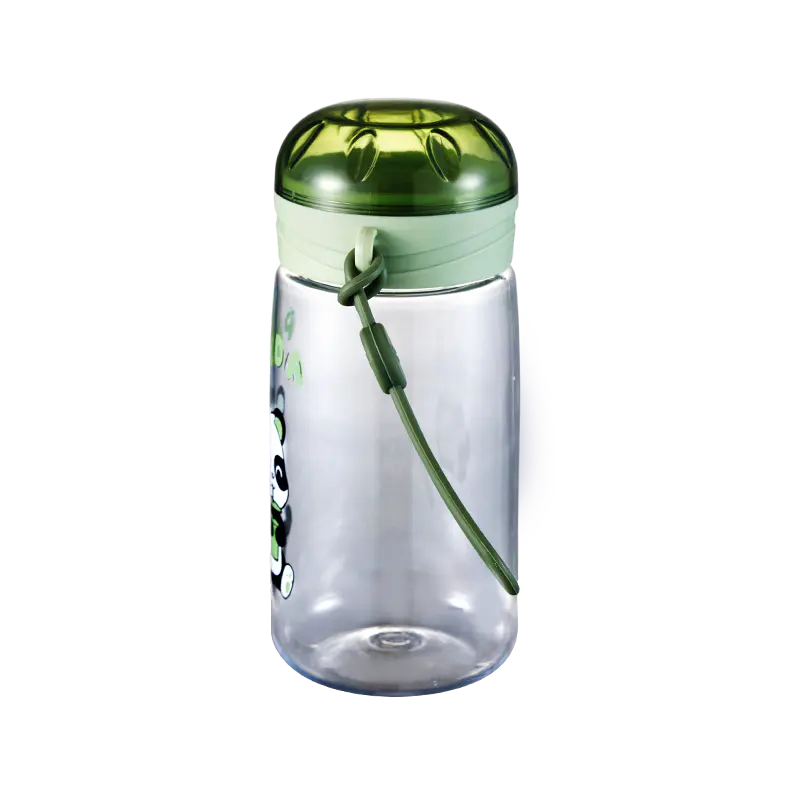
A Straw Plastic Water Bottle is harder to clean thoroughly than a bottle with a simple open-top design, and this structural reality is directly connected to why straw bottles tend to develop odors more quickly and more persistently.
The straw channel is a narrow, enclosed tube that beverage passes through with every use. Several factors combine to make it a reliable site for odor development:
- Limited airflow: A capped bottle with an inserted straw dries slowly after use. The interior of the straw remains moist long after the bottle's exterior and main chamber have dried, creating a sustained environment where mold spores and bacteria can establish.
- Residue accumulation: Even clear water leaves mineral deposits inside a straw over time. Colored or flavored beverages leave residue that adheres to the straw's interior walls and is not dislodged by water flow alone.
- Inaccessibility: A standard bottle brush cannot reach the interior of a narrow straw. Without a dedicated straw cleaning brush, the interior surface is never mechanically cleaned — only flushed.
- Connection points: Where the straw joins the lid or passes through a gasket, there are small gaps and surfaces that trap liquid and residue. These junctions are often the actual source of the smell rather than the straw channel itself.
Understanding this explains why cleaning the bottle body thoroughly but neglecting the straw does not resolve the odor. The straw is often where the problem originates.
How to Remove Odors from Plastic Water Bottles
Method 1: White Vinegar Soak
White vinegar is an effective odor remover for plastic bottles because acetic acid neutralizes many of the odor-causing compounds absorbed into the plastic surface and also kills bacteria and mold on contact. It does not leave a harmful residue and is safe for all food-contact plastics.
Steps:
- Disassemble the bottle completely — remove the lid, straw, gaskets, and any other removable components.
- Fill the bottle halfway with undiluted white vinegar. Cap it and shake vigorously for thirty seconds.
- Add enough warm water to fill the bottle and allow it to soak for a minimum of thirty minutes. For persistent odors, an overnight soak produces better results.
- Clean the straw separately by soaking it in a small container of vinegar solution and then running a straw brush through the interior.
- Rinse all components thoroughly with clean water. The vinegar smell dissipates quickly as the plastic dries.
This method works particularly well for the absorbed plastic odor type, because the acid penetrates the surface layer where the odor compounds are held.
Method 2: Baking Soda Treatment
Baking soda neutralizes acidic odor compounds and absorbs ambient odors without introducing a competing smell. It is gentler than vinegar on plastic and particularly useful for bottles that smell musty rather than carrying a specific beverage odor.
Steps:
- Disassemble all components.
- Add two tablespoons of baking soda to the empty bottle and add enough warm water to dissolve it fully.
- Seal the bottle and shake to coat the interior surfaces. Let it sit for several hours.
- For the straw, make a paste of baking soda and a small amount of water, apply it to a straw brush, and scrub the interior.
- Rinse everything thoroughly. For very persistent odors, a combination of baking soda and vinegar — applied sequentially rather than simultaneously — addresses both alkaline and acidic odor compounds.
The baking soda method is a practical choice for regular maintenance cleaning because it is gentle enough to use frequently without degrading the plastic surface over time.
Method 3: Lemon and Salt Scrub
This method combines the mild acid of lemon juice with the mechanical abrasive action of salt, making it useful for bottles where the odor is accompanied by staining or residue buildup on visible surfaces.
Steps:
- Cut a lemon and squeeze the juice into the bottle along with a tablespoon of coarse salt.
- Add a small amount of warm water and seal the bottle. Shake vigorously so the salt acts as a mild abrasive against the interior walls.
- For the straw, squeeze lemon juice directly into one end and allow it to sit before flushing through with the straw brush.
- Rinse thoroughly. The natural citrus compounds help neutralize plastic odor while the salt provides light mechanical cleaning.
This method works well as a periodic treatment rather than an everyday cleaning approach, particularly after the bottle has held particularly fragrant beverages like coffee or citrus drinks.
Method 4: Hot Water and Dish Soap Deep Clean
For bottles with current bacterial or mold odor rather than absorbed plastic smell, hot water with dish soap is the foundational cleaning approach that should precede any of the deodorizing methods above.
Steps:
- Fill the bottle with the hottest tap water available and add a small amount of dish soap.
- Seal and shake, then let soak for fifteen minutes.
- Use a bottle brush to scrub all interior surfaces, paying particular attention to the bottom and any recessed areas around the lid threads.
- Clean the straw with a straw cleaning brush, running it through the full length of the straw multiple times.
- Remove and clean all gaskets and seals — these are frequent sites of mold growth that is not visible until the gasket is removed from its seating.
- Rinse all components with hot water and allow to dry completely before reassembling.
This step is important: reassembling a damp bottle traps moisture and restarts the odor cycle even after a thorough clean. Drying with the bottle upside down and the lid off — or leaving components on a drying rack for several hours — ensures complete moisture evaporation.
Deep Cleaning Guide for Straw Bottles
The Straw Requires Its Own Dedicated Process
Because the straw is the component most likely to harbor persistent odor, and because it cannot be reached with a standard brush, it deserves a cleaning process that addresses its specific structure.
Tools required:
- A straw cleaning brush — a narrow, flexible brush specifically sized to fit inside the straw diameter
- A small container deep enough to submerge the straw fully
- Cleaning solution of choice (vinegar, baking soda solution, or dish soap and hot water)
Process:
- Remove the straw from the lid or bottle and inspect both ends. Any visible discoloration, film, or dark spotting indicates mold or residue buildup.
- Submerge the straw fully in cleaning solution and allow it to soak for at least twenty minutes. For mold, a vinegar soak is more effective than soap alone.
- Run the straw brush through the full length of the straw from both ends. Rotate the brush as it moves through to ensure contact with the full interior circumference.
- Flush the straw with clean water while holding one end against a running tap — the water pressure helps dislodge loosened residue.
- Inspect visually by holding the straw up to a light source. A clean straw should show a clear view through the interior without film or dark spots.
- Allow to dry fully before reinserting. Standing the straw vertically on a clean surface or propping it so air circulates through both ends speeds drying.
The gasket check: Lid gaskets — the silicone or rubber seals that make the lid watertight — are another high-risk odor site. These should be removed at each cleaning, inspected for mold (typically appearing as dark spots or a gray film), cleaned with a small brush, and replaced only after drying. Gaskets that show significant mold growth that does not clean off should be replaced.
Comparing Odor Removal Methods by Situation
| Situation | Recommended Method | Why It Works |
|---|---|---|
| General musty smell, infrequent use | Baking soda soak | Neutralizes ambient odors without harsh treatment |
| Absorbed beverage odor (juice, coffee) | White vinegar overnight soak | Acid penetrates and neutralizes absorbed compounds |
| Staining and surface residue | Lemon and salt scrub | Mechanical cleaning with mild acid action |
| Mold or visible bacterial growth | Hot water and soap, then vinegar | Soap removes residue; vinegar kills remaining organisms |
| Straw-specific odor | Dedicated straw brush with vinegar soak | Reaches interior surfaces that rinsing cannot |
| New plastic smell from unused bottle | Baking soda soak or vinegar soak | Draws out factory odors from new plastic material |
| Persistent smell after cleaning | Combination method: soap, then baking soda, then vinegar | Addresses all possible odor sources in sequence |
The combination approach — cleaning with soap and hot water first, then following with a targeted deodorizing soak — produces consistent results across all odor types because it addresses both the biological and chemical components of the problem.
How to Prevent Odors from Returning
Daily Habits That Break the Odor Cycle
Removing an existing odor is a one-time fix that will need to be repeated unless the habits that allowed the odor to develop are also changed. The conditions that produce bottle odors — residue, moisture, and closed environments — are controllable with straightforward daily practices.
- Rinse immediately after use. Beverage residue that is flushed out before it dries is significantly easier to remove than residue that has adhered to the plastic surface over hours. A simple rinse immediately after finishing a drink session substantially slows odor development.
- Clean the straw every day. Even if the bottle body only receives a quick rinse, running a straw brush through the straw daily prevents residue accumulation inside the channel.
- Never store with liquid inside. A bottle left partially filled and capped is an ideal bacterial growth environment. Empty, rinse, and leave open to dry between uses.
- Dry before reassembling. Reassembling a still-damp bottle — particularly with the straw and gaskets in place — creates the enclosed moist environment that produces odors within hours.
- Deep clean weekly. One thorough cleaning per week using vinegar or baking soda treatment maintains the bottle in odor-free condition between daily rinses.
- Replace gaskets periodically. Gaskets are inexpensive and are often the persistent odor source even in bottles that are otherwise well-maintained. Replacing them every few months removes a common recurrence point.
Does the Bottle Material Affect How Quickly Odors Develop?
Plastic, Stainless Steel, and Glass Behave Differently
Not all reusable bottle materials are equally susceptible to odor development, and understanding the differences helps put the plastic bottle cleaning challenge in context.
Plastic: The porous microstructure of plastic allows odor compounds to absorb into the surface layer over time. Once absorbed, they require active treatment to remove rather than simple rinsing. Plastic also provides a surface that bacteria adhere to more readily than smoother materials.
Stainless steel: The non-porous surface of stainless steel does not absorb odor compounds. Bacterial adhesion is lower on metal surfaces than on plastic. The result is that stainless steel bottles are significantly less prone to persistent odor development with ordinary cleaning. The main odor risk in stainless steel bottles is around the lid, gaskets, and any straw components — which are often made of plastic or silicone and follow the same rules as plastic bottle components.
Glass: Glass is non-porous and non-absorbent, making it the material least prone to odor retention. The practical trade-off is weight and fragility, which limits its use in active settings. Glass bottle lids often incorporate plastic or silicone components that can develop odors even when the glass body remains odor-free.
For a Straw Plastic Water Bottle specifically, the combination of plastic absorption potential and the straw's cleaning challenges makes consistent maintenance more important than it would be for a stainless steel alternative. This is not a flaw in the product design — it is a characteristic that is manageable with the right cleaning habits and tools.
Choosing a Bottle Designed for Easy Maintenance
Bottle design affects how easy or difficult routine cleaning will be, and this dimension is worth considering either when selecting a new bottle or when evaluating whether a current bottle is worth continued maintenance effort.
Features that support easier cleaning and odor prevention:
- Removable, wide-bore straws: A straw with a larger interior diameter is easier to clean with a standard straw brush and dries faster after cleaning. Straws that cannot be removed from the lid cannot be adequately cleaned without disassembly.
- Fully disassemblable lids: Lids where all gaskets, valves, and sealing components can be removed separately allow every surface to be cleaned individually and dried completely.
- Smooth interior surfaces: Recessed textures, grid patterns, or ribbed interiors inside the bottle body create surface area where residue accumulates. Smooth interiors are significantly easier to clean thoroughly.
- Durable plastic formulations: Higher-quality food-grade plastics with lower surface porosity absorb odor compounds more slowly than lower-grade alternatives.
For buyers sourcing straw bottles in volume — for retail, hospitality, or promotional use — these design characteristics directly affect end-user satisfaction with the product over time. A bottle that develops persistent odors within a few months of regular use generates returns and negative feedback regardless of how well it was initially received. Taizhou Huangyan Zuohao Plastic Factory. manufactures plastic water bottles including Straw Plastic Water Bottle designs across a range of materials, lid mechanisms, and straw configurations. Their production covers food-grade material specifications, structural design for cleanability, and customization options relevant to both consumer retail and commercial sourcing requirements. For distributors, importers, and product buyers evaluating bottle sourcing, reaching out to their team to discuss design specifications, material documentation, and available formats is a practical starting point for finding a product that holds up well in everyday use.
Related Products
We specialize in the production and sales of plastic water cups, and also provide customization services
and comprehensive after-sales support.
QUICK LINKS
CONTACT US
- Address:No. 1 Shuangyou Road, Nancheng Street, Huangyan District, Taishan City, Zhejiang Province
- Tel: +86-19957687783
- Email: [email protected]
- Whatsapp: +86-19957687783
MOBILE
Copyright © Taizhou Huangyan Zuohao Plastic Factory.
All Rights Reserved.
