


 English
 عربى
Water Bottle Gift Boxes & Complete Set Fit

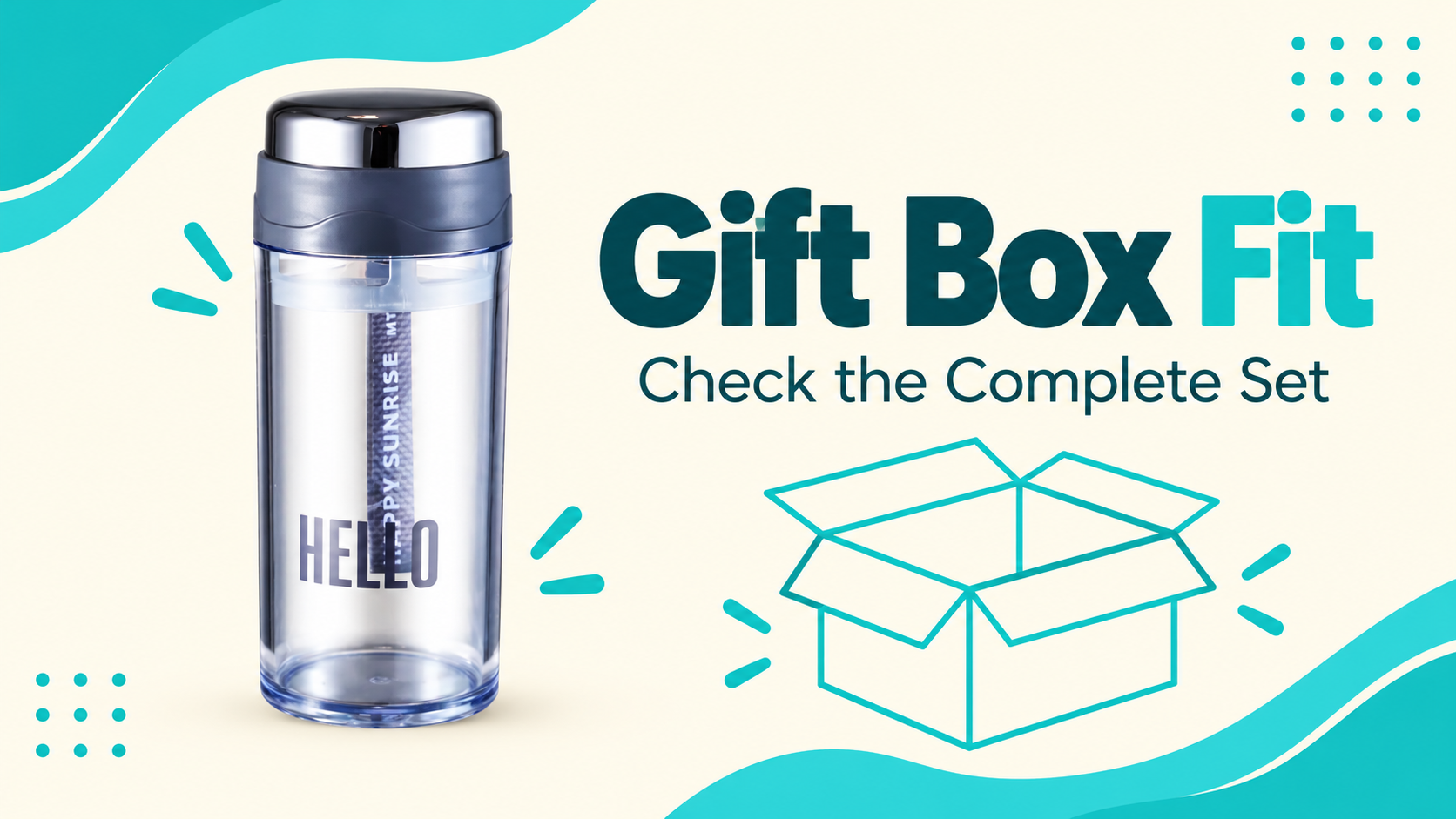
Water Bottle Gift Boxes: Check Fit After the Accessories Are Added
A box can fit an empty bottle and still fail to fit the product that will actually be sold. A carry strap, leaflet, spare part or protective insert changes the packing arrangement. If those pieces are added only after artwork is approved, the team may discover a tight lid, an awkward bulge or a bottle that moves too freely inside its presentation box.
For distributors and promotional buyers, gift packaging should be reviewed as a complete sale unit. The goal is to establish the intended contents and packing method before the box dimensions are frozen. A digital artwork proof and a physical packing sample answer different questions, and both deserve a place in the approval file.
List everything that goes inside
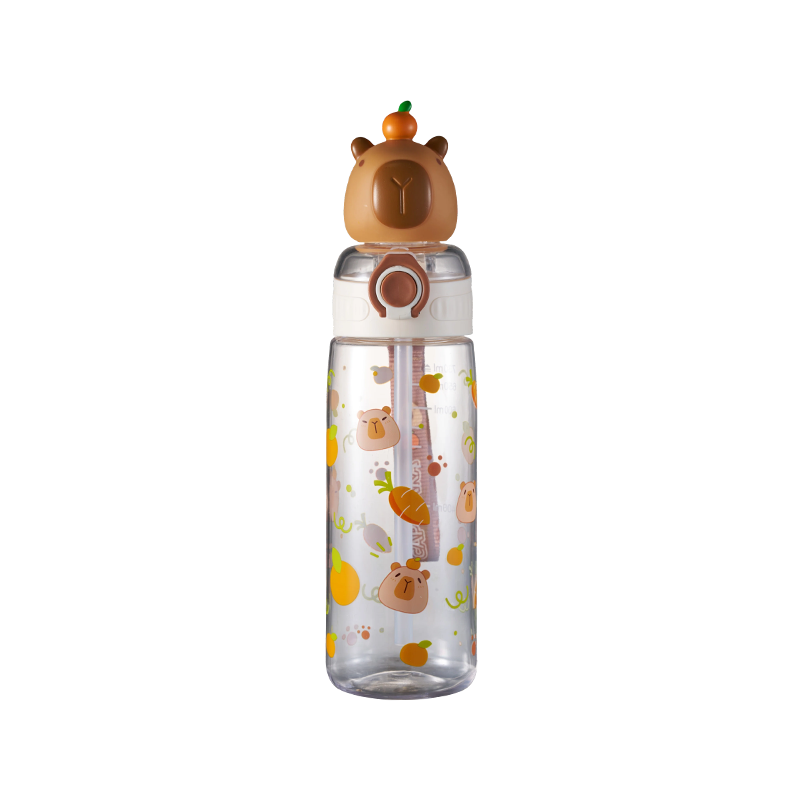
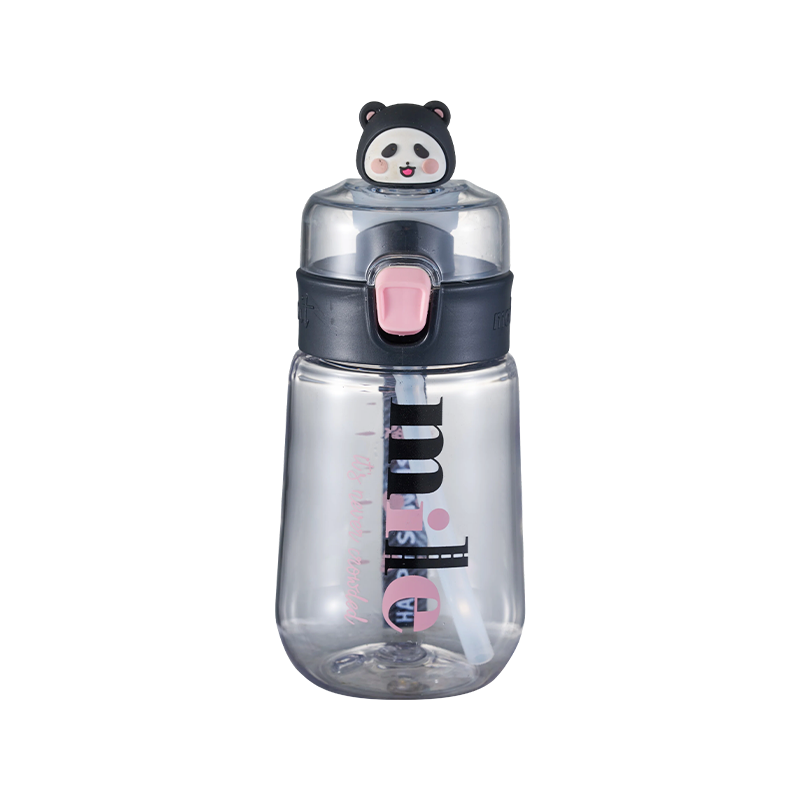
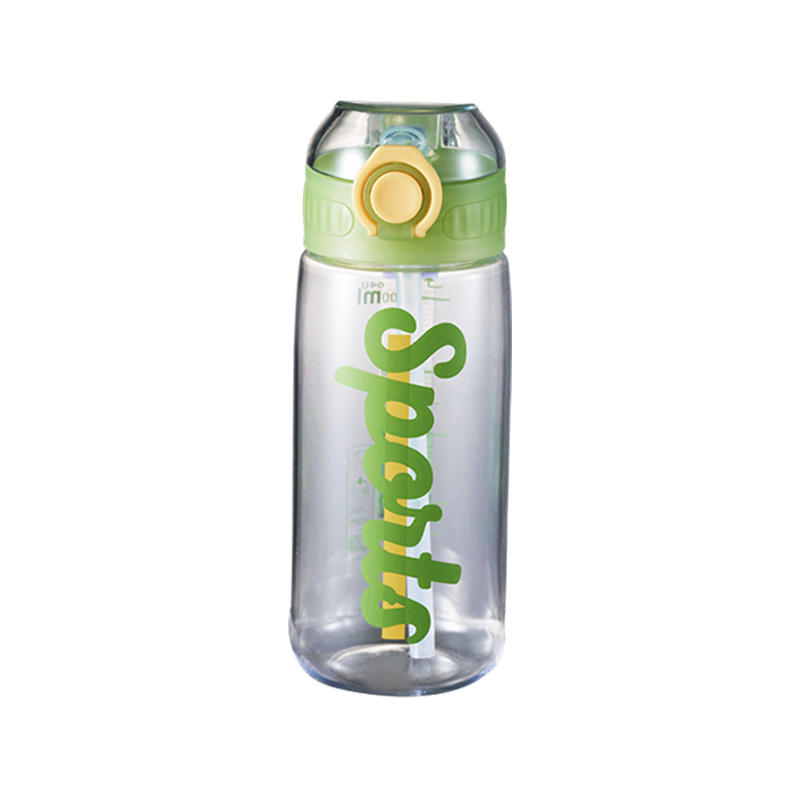
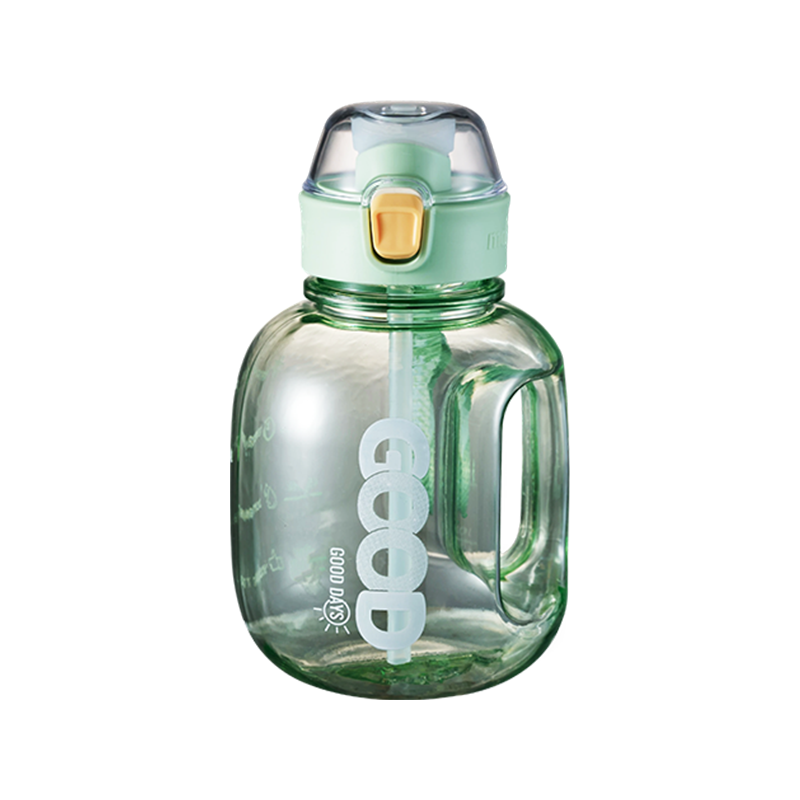
The plastic straw bottle collection provides a product reference for this discussion; confirm the exact ordered version and its supporting documents before applying the checklist.
Identify the exact bottle model, lid arrangement and accessories. State whether the bottle is packed assembled, how the strap is placed and where any leaflet or spare component belongs. A short contents list prevents the packaging supplier from designing around an incomplete sample.
Do not substitute a different bottle simply because its stated capacity is similar. Body shape, lid height and projecting parts can change the required space. Use the actual ordered version or a clearly identified dimensional reference approved by the responsible product team.
Check the closed box
Place the full contents into the proposed packing arrangement and close the box using the intended method. Inspect whether the lid, latch or handle is pressed against the packaging. Check that opening and removing the bottle is practical without forcing the product or tearing the box.
The box's internal dimensions are not the same as its external dimensions. Material thickness, folds and inserts reduce usable space. Ask which dimensions appear on the quotation and drawing, and keep those definitions consistent when the box is compared with a master carton.
| Packing element | Sample check | Record to retain |
|---|---|---|
| Bottle | Exact body and lid version | Product identification |
| Accessories | Complete quantity and position | Contents list |
| Insert | Fit around the actual product | Approved arrangement photo |
| Gift box | Closed fit and removal sequence | Internal and external dimensions |
| Master carton | Number and orientation of boxed units | Carton packing plan |
These checks establish fit and packing identity. They do not prove transport performance. If the distribution route requires a particular packaging test, agree the relevant method and acceptance criteria separately with the responsible packaging team.
Treat artwork as a physical layout
An attractive flat proof may place important information across a fold, closure or cutout. Review the printed layout on a formed box or an accurate structural mock-up. Confirm the reading direction when the box is displayed and when multiple boxes are packed together.
Use the approved dieline and revision. If the structure changes after artwork approval, review the affected panels again rather than assuming the original proof remains valid. A small dimensional adjustment can move a logo, barcode area or required product description closer to a fold.
- Confirm the full sale-unit contents before sizing the box.
- Distinguish internal dimensions from outside dimensions.
- Review the closed box with all accessories in place.
- Check artwork on the correct structural revision.
- Record how boxed units are arranged in the master carton.
Keep mandatory market information within the review by the people responsible for it. This article does not establish labelling requirements for every market. The purchasing file should identify who checks those requirements and which approved text is supplied for printing.
Make the packing method reproducible
Photograph the approved contents before closure and write a brief packing sequence. If a strap is folded around the bottle, show the position rather than using a vague instruction such as “pack neatly.” The aim is a repeatable arrangement, not a requirement that operators interpret a styled marketing photograph.
Identify any protective materials included in the approved sample. If those materials are changed for bulk production, review the effect on fit and the relevant packaging requirements. Avoid approving a padded sample and then comparing it with an unpadded commercial quotation as though the two contain the same packing specification.
Where several bottle colours share one box design, confirm whether all fit the same insert and whether external identification is needed. A common presentation design can be useful, but the warehouse still needs a reliable way to pick the correct variant without opening every sale unit.
Finish with a complete commercial basis
The order should identify whether the quoted unit includes the bottle, accessories, gift box, insert and master carton. List exclusions clearly in the purchasing record so that a low packaging price is not mistaken for a complete ready-to-sell unit.
At receiving, compare representative packed units with the approved arrangement and verify the carton quantity against the packing plan. Keep any discrepancies tied to the relevant batch or order information. A box that looks correct from outside may still contain a different accessory arrangement.
Good gift packaging begins with the product that will actually be supplied. By reviewing full contents, closed-box fit and the master-carton arrangement together, buyers can reduce the chance that an attractive presentation design becomes a late-stage packing problem.
If the order is intended for a particular campaign, confirm the final contents before releasing the printed packaging. A late request to add a leaflet or accessory should trigger another physical fit review, even when the artwork itself does not change.
Related Products
We specialize in the production and sales of plastic water cups, and also provide customization services
and comprehensive after-sales support.
QUICK LINKS
CONTACT US
- Address:No. 1 Shuangyou Road, Nancheng Street, Huangyan District, Taishan City, Zhejiang Province
- Tel: +86-19957687783
- Email: [email protected]
- Whatsapp: +86-19957687783
MOBILE
Copyright © Taizhou Huangyan Zuohao Plastic Factory.
All Rights Reserved.
