


 English
 عربى
عربىNews

What Determines Water Flow in a Straw Plastic Water Bottle
A straw bottle is easy to use, so it is easy to overlook what happens between the bottle and the drinking opening. Water has to move through a narrow path, while air takes the place of the water leaving the container. The position of the straw, the way the lid is fitted, and the angle of the bottle can all change that process.
This becomes more noticeable in a Straw Plastic Water Bottle because the drinking path is usually fixed by the lid and internal straw. A small change in the way the bottle is held may move the water away from the lower end of the straw. A different straw shape can also alter the path water takes before reaching the mouth.
For everyday use, water flow is therefore connected to several simple design choices. Looking at those choices one by one helps explain why two bottles with a similar appearance may feel different when drinking from them.
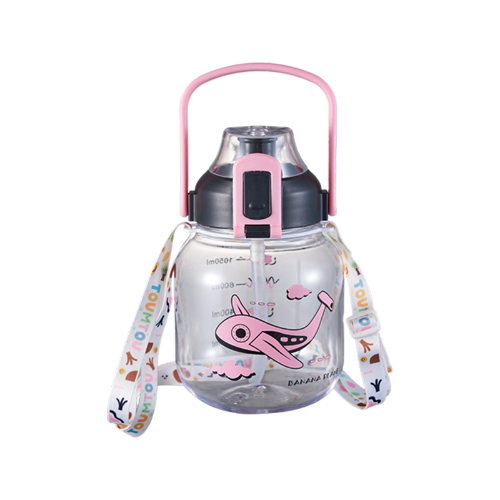
How Does Water Move Through a Straw Plastic Water Bottle
Water does not simply rise through the straw on its own. When someone drinks, liquid is drawn through the straw toward the opening. At the same time, air needs to enter the bottle as the space occupied by the water changes.
The lid becomes part of this process. It holds the straw in place and controls the openings between the inside of the bottle and the outside. If the path for air is restricted, the movement of water can change.
The bottle itself also matters. Water settles toward the lowest part of the container, so its position changes when the bottle is tilted. The lower end of the straw needs to remain close enough to the water for drinking to continue normally.
| Component | Relation to water flow |
| Straw | Provides the path for water |
| Lid | Connects the drinking path to the bottle |
| Bottle body | Holds and positions the water |
| Straw end | Remains in contact with the available water |
| Bottle angle | Changes the position of water inside |
These parts are connected during use. A change in one can affect what happens in another.
How Does Straw Diameter Affect Water Flow
The inside width of a straw determines how much space water has to pass through. A narrower passage leaves less room for movement, while a wider passage provides a larger route.
That difference can be noticed when drinking. A person may need to draw water through a narrow straw differently from a wider one. However, straw width cannot be considered by itself. The length of the straw and the rest of the bottle design also influence the result.
A bottle intended for a compact drinking setup may use a different straw arrangement from a bottle with a taller body. Changing the straw without considering the bottle can therefore produce a different drinking experience.
There are several details that normally need to be considered together:
- the internal width of the straw
- the length of the drinking path
- the shape of the straw
- the opening in the lid
- the position of the straw inside the bottle
For a Straw Plastic Water Bottle, these elements form one continuous path. The diameter is only one part of that path, rather than an isolated feature.
How Does Straw Length Influence the Drinking Experience
Straw length is closely tied to the shape and height of the bottle. The lower end needs to reach the water, while the upper end has to remain comfortably positioned at the lid.
If the straw is too short for the bottle, its lower opening may sit above the water when the bottle is held in a certain position. A longer straw can reach deeper into the container, but extra length also creates a longer route between the water and the drinking opening.
The relationship becomes easier to see with bottles that have noticeably different shapes. A short, wide container does not require the same internal arrangement as a narrow, tall one.
The position of the lower straw end also changes as the bottle is tilted. When there is plenty of water inside, this may be less noticeable. As the water level drops, the position of the straw becomes more relevant.
For that reason, straw length is generally considered together with bottle dimensions rather than chosen independently.
How Does Straw Shape Affect Water Flow
Not every straw follows a straight line. Some have a curved section near the drinking opening, making it easier to reach the mouth without lifting the bottle into a steep position.
A smooth curve and an accidental bend are two different things. The former is part of the intended design. The latter can reduce the open space inside the straw and interfere with the movement of water.
Flexible straws also move as the bottle is handled. They may shift slightly when the bottle is placed in a bag or when someone changes their grip. What matters is whether the straw can return to a usable position rather than remaining compressed.
| Straw condition | What may happen during use |
| Straight path | Water follows a direct route |
| Planned curve | Changes the direction of the drinking path |
| Flexible section | Allows some movement |
| Sharp bend | Can restrict the passage |
| Poorly positioned connection | May affect the continuity of the path |
The shape also needs to work with the lid. A curve that looks suitable by itself may not be practical if it places the drinking opening in an awkward position.
How Does the Bottle Lid Affect Water Flow
The lid is often treated as a separate part because it is the piece people open and close. During drinking, however, it becomes part of the water path.
The straw passes through or connects to the lid, and air has to move through the appropriate opening as water leaves the bottle. The arrangement needs to support both functions at the same time.
A loose connection can allow the straw to shift. A poorly fitted connection can also affect how the drinking path is maintained. These details become particularly noticeable when the bottle is moved while someone is drinking.
The lid also needs to remain closed when the bottle is being carried. This is where the drinking function and carrying function meet. The same component needs to provide an opening for drinking while keeping the contents contained when the bottle is stored.
In a Straw Plastic Water Bottle, the lid is therefore more than a cover. Its connection with the straw influences how the internal and external parts of the drinking path work together.
How Does the Drinking Angle Change Water Flow
The water inside a bottle moves whenever the bottle changes position. Hold it upright and the water settles toward the bottom. Tilt it and the water shifts toward one side.
That movement changes where the lower end of the straw sits in relation to the water. A person drinking while seated may hold the bottle in one position, while someone walking or exercising may use a different angle.
The change is particularly noticeable when there is less water remaining. The straw may need to reach a different part of the bottle to stay in contact with the liquid.
This does not mean that a bottle has to be held in one fixed position. People naturally adjust their grip while drinking. A practical design takes those ordinary movements into account rather than assuming the bottle will always remain perfectly upright.
The shape of the bottle can help determine how much the water moves during this process. A narrow body and a wider body will not necessarily place the water in the same location when tilted.
How Does the Straw Position Affect Water Delivery
The lower end of the straw has a simple job: it needs access to the water inside the bottle. Its exact position can nevertheless make a difference.
In some bottles, the straw extends close to the bottom. In others, the internal arrangement follows the shape of the container. If the bottle is tilted or moved, the straw can shift along with it.
This is particularly relevant when the bottle is being carried around. Movement inside a bag, for example, can cause the straw to move slightly. Repeated handling can have a similar effect.
A suitable internal position should leave enough room for water to reach the straw opening while allowing the bottle to be used in normal positions. The straw should not be pressed tightly against the bottle wall or placed where its opening can easily become obstructed.
For a Straw Plastic Water Bottle, the internal straw position is closely linked to bottle shape. Changing one without considering the other can alter the way water reaches the drinking path.
What Should Be Considered When Designing for Consistent Water Flow
By this point, it becomes clear that water flow comes from a combination of small design decisions. There is no single part that controls the entire process.
The straw diameter determines the available passage. Its length determines how far water needs to travel. Its shape determines the direction of that path. The lid keeps the upper part connected to the bottle and provides the openings needed during drinking.
Then there is the bottle itself. Its shape affects where water collects, while its position changes the relationship between the water and the lower end of the straw.
For a Straw Plastic Water Bottle, the main considerations can be viewed as a connected set:
- Straw size — The passage needs to suit the intended drinking arrangement.
- Straw length — The lower end should remain capable of reaching the water.
- Straw shape — Curves should support the intended drinking position without creating unnecessary restrictions.
- Lid connection — The straw needs to stay properly connected and positioned.
- Bottle shape — The container influences how water moves when it is tilted.
- Internal straw position — The lower opening needs to remain accessible as the bottle is used.
- Drinking angle — Everyday changes in position can alter where water sits inside the bottle.
These factors are easier to understand when viewed as one drinking path rather than as unrelated product features. The straw begins inside the bottle, passes through the lid, and ends at the drinking opening. Water follows that route while air moves into the space left behind.
The same principle applies during ordinary handling. A bottle may be placed on a desk, carried in a bag, held while walking, or used during exercise. Each situation changes the position of the container slightly. A well-considered Straw Plastic Water Bottle design takes these normal changes into account without relying on a single component to control the entire flow.
Related Products
We specialize in the production and sales of plastic water cups, and also provide customization services
and comprehensive after-sales support.
QUICK LINKS
CONTACT US
- Address:No. 1 Shuangyou Road, Nancheng Street, Huangyan District, Taishan City, Zhejiang Province
- Tel: +86-19957687783
- Email: [email protected]
- Whatsapp: +86-19957687783
MOBILE
Copyright © Taizhou Huangyan Zuohao Plastic Factory.
All Rights Reserved.
