

 English
 عربى
NEWS
Home > News > Industry News > How Should Manufacturers Evaluate Heat Resistance in Plastic Tea Infuser Bottle Materials?

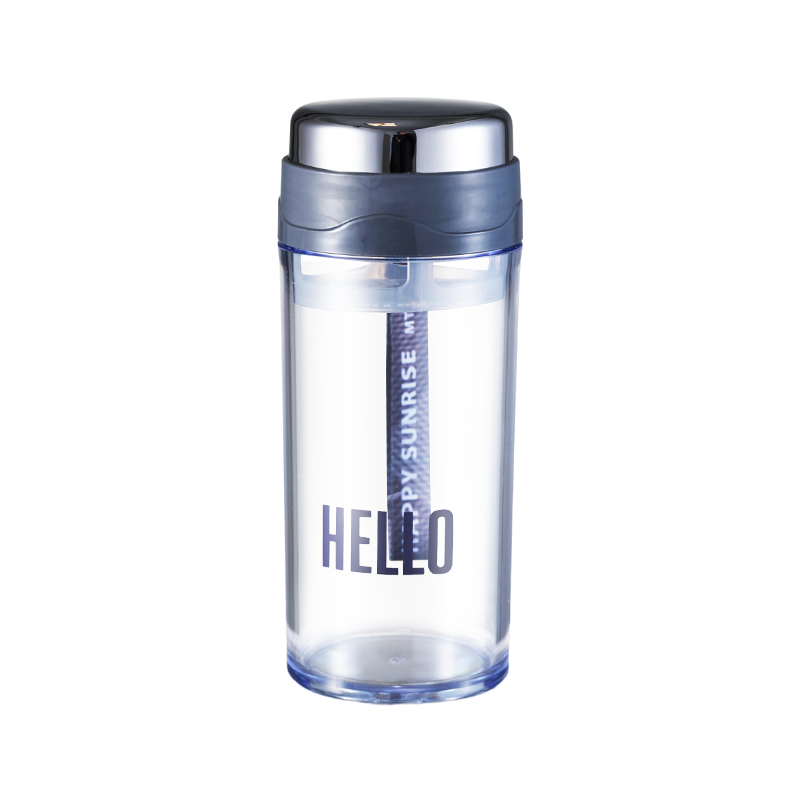
A plastic tea infuser bottle may look fine after its first contact with hot water, but that does not tell manufacturers much about how it will perform after months of use. Repeated heating and cooling can gradually affect the bottle body, lid threads and sealing rings. Some parts may deform, while others may lose their ability to form a tight seal.
The challenge is that a tea bottle is made up of several components, and they do not necessarily have the same temperature limits. When developing a Plastic Tea Infuser Bottle, manufacturers need to check the resin, individual parts and complete assembly under conditions that reflect how consumers actually brew tea.
Set the Temperature Requirements First
Before choosing a plastic material, manufacturers need to know what temperatures the finished bottle will encounter.
A bottle intended for cold brewing has very different requirements from one designed to hold freshly prepared hot tea. Daily use also matters. A bottle that is heated once in a while may experience less material stress than one used several times a day.
The product specification should clearly state:
These conditions provide a basis for selecting materials and planning tests. Temperature limits should account for the weakest component, not just the main bottle body.
Compare Materials Before Finalizing the Design
PP, Tritan copolyester and silicone are among the materials used in reusable drinkware and its components. Each has different characteristics, so the choice depends on the bottle's structure and intended use.
Material datasheets are a useful starting point, but they cannot replace testing of the finished part. Wall thickness, molding conditions and component shape can all influence how a material behaves.
Understand the Material's Thermal Properties
Two technical values often appear in plastic material specifications: heat deflection temperature (HDT) and glass transition temperature (Tg).
HDT indicates the temperature at which a material deforms under a specified load during a standardized test. It helps compare materials, but it should not be treated as the maximum safe temperature for holding drinking water.
Tg describes the temperature range where certain polymers begin changing from a rigid, glassy state toward a softer condition. It is useful when assessing dimensional stability, but it does not establish a product's operating limit on its own.
Creep resistance, thermal expansion and impact strength also deserve attention. These properties help engineers assess whether a bottle will retain its shape and mechanical performance during repeated exposure to hot water.
Check Every Component, Not Just the Bottle Body
A bottle may have a heat-resistant body but still develop problems around the lid or infuser. Seals can lose compression, threaded parts may become distorted, and a poorly selected spout material may soften.
| Component | Important property | Possible problem |
|---|---|---|
| Bottle body | Dimensional stability | Warping or deformation |
| Lid | Heat resistance and thread stability | Cracking or poor closure |
| Infuser basket | Structural strength | Distortion or loose fitting |
| Silicone seal | Heat resistance and compression recovery | Leakage |
| Drinking spout | Shape and surface stability | Deformation or uncomfortable use |
Pay particular attention to the joints. Even a small change in the size of a sealing groove or threaded connection can affect how well the assembled bottle stays closed.
Test the Complete Bottle With Hot Water
Material specifications alone cannot show how the finished bottle will behave. Manufacturers need to test assembled samples using the temperatures and contact times specified for the product.
A typical evaluation involves filling the bottle with hot water, leaving it for a defined period, and checking the body, lid, infuser and seals. The same process can then be repeated over multiple heating and cooling cycles.
During these tests, record any changes in dimensions, appearance, closure fit and leakage. Testing should also include normal opening and closing operations after exposure, since a lid that becomes difficult to remove may indicate a change in the threaded parts.
For useful comparisons, keep water temperature, exposure time, cooling conditions and sample quantities consistent.
Check Food-Contact Safety Separately
Heat resistance does not automatically mean that a plastic material is suitable for hot beverages. Chemical migration can depend on the resin formulation, temperature and length of contact.
Manufacturers need relevant food-contact documentation for the actual material grades, including pigments and additives. Migration testing should follow the requirements of the target market and use conditions representative of the finished product.
Taste and odor checks are also worthwhile. After hot-water exposure, the bottle should not leave an unwanted smell or taste in the tea. Changes in surface appearance or material condition should be recorded as well.
Include Repeated Cleaning in Durability Tests
Tea leaves, tannins and mineral deposits can collect around the infuser and inside the bottle. Users need to clean these areas regularly, so the recommended washing method should be considered during development.
For dishwasher-compatible models, test the complete assembly under the stated washing conditions, including temperature, detergent and drying cycle. The heat tolerance of the main resin alone is not enough to support a dishwasher-safe claim.
The infuser should also be easy to remove and wash. A simpler structure with fewer concealed spaces makes routine cleaning less troublesome.
Keep Material Specifications Consistent in OEM Production
Changing resin suppliers or material formulations can affect transparency, heat resistance and dimensional stability, even when the material carries the same general name.
For OEM orders, buyers should request material datasheets, food-contact documents and hot-water test results. Approved material grades should be recorded before mass production, with clear requirements for wall thickness, lid fit and seal dimensions.
Production samples should also be checked against the approved version. This helps catch changes in molding quality or component fit before they affect a large batch.
Getting Heat Resistance Right
A Plastic Tea Infuser Bottle needs to withstand more than one round of hot-water exposure. Its body, lid, infuser and seals must continue working together after repeated use and cleaning.
Manufacturers who test the complete assembly, rather than relying only on resin specifications, have a much clearer basis for setting temperature limits and approving materials. That makes it easier to deliver a bottle suited to everyday tea preparation without making unsupported claims about its heat resistance.
Copyright © Taizhou Huangyan Zuohao Plastic Factory.
All Rights Reserved.