


 English
 عربى
عربىNews

Which Design Features Matter in Spill Proof Water Bottles
A water bottle can look like the simplest object in a bag, yet small design choices change how it actually performs day to day. A bottle riding around in a school backpack faces different jostling than one strapped to a gym bag during a workout, and a bottle sitting quietly next to a laptop deals with different demands than one bouncing around on a hiking trail.
That's why buyers often look past color and shape when choosing a Spill Proof Plastic Water Bottle. The cap, straw, sealing area, bottle body, and carrying method all shape how convenient the thing actually is once it leaves the store shelf.
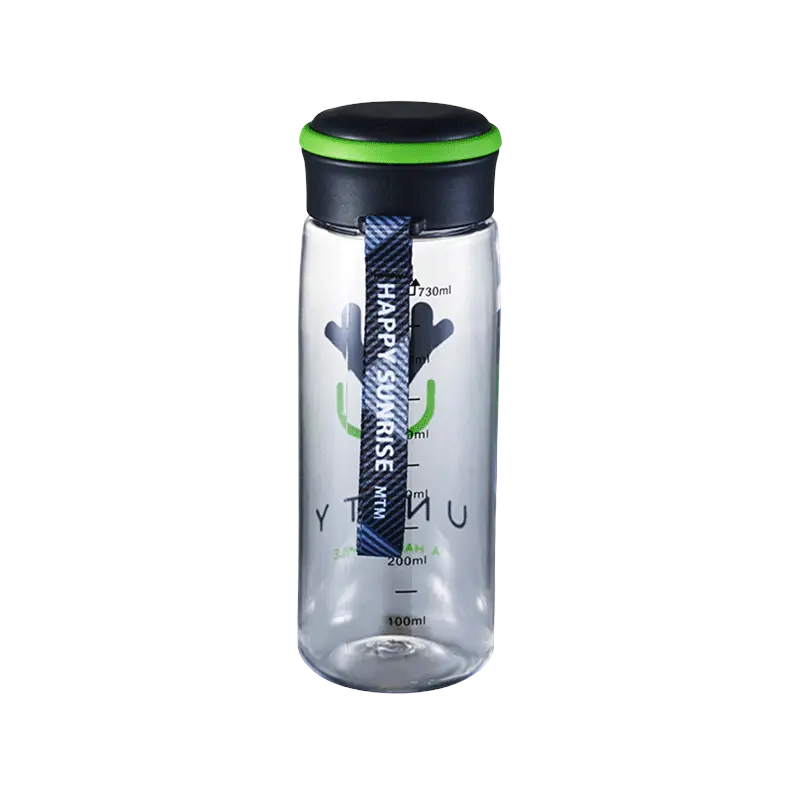
Manufacturers, distributors, and commercial buyers care about these details too, since they affect how a product gets positioned in the market. A bottle built for sports use often needs a different configuration than one meant to sit quietly on an office desk all day.
Growing interest in reusable drinkware has pushed more attention toward practical design over pure aesthetics. Buyers increasingly want bottles that carry easily, drink easily, and hold up to the specific activities where people actually plan to use them.
Why Does Spill Proof Structure Matter in Water Bottle Design?
A bottle can be easy enough to carry yet still turn into a mess if liquid escapes during normal handling. Bags get tossed on their sides on a bus seat, bottles get shaken around in a backpack during a commute, and users open and close the same cap dozens of times throughout a single day.
A Spill Proof Plastic Water Bottle needs a structure built around what happens when the bottle isn't sitting neatly upright on a counter.
The goal isn't making the lid stubbornly difficult to open, since users still want quick access to their water without a fight. The real challenge is striking a balance between easy drinking and closure that actually holds.
| Design Area | Practical Consideration |
|---|---|
| Cap | Secure closure during carrying |
| Seal | Helps limit unwanted liquid escape |
| Straw opening | Supports controlled drinking |
| Bottle body | Suitable for regular handling |
| Carrying feature | Makes transportation easier |
These parts don't work in isolation from each other. A nicely engineered cap can still fail if the sealing area underneath doesn't actually fit against it properly, and a sturdy bottle body doesn't help much if the drinking opening refuses to close all the way.
Commercial buyers benefit from evaluating the bottle as one connected system rather than judging each part separately. This matters especially for sports, travel, school, and outdoor products, since each of those settings exposes the bottle to a different set of movements and handling habits over the course of a normal week.
How Do Caps Influence Spill Resistance?
The cap tends to be the first thing anyone notices about a drinking bottle. It protects the opening and gives the user a way to control access to whatever's inside, whether that's water or a sports drink.
Different bottles rely on different cap structures to do this job. Some stick with simple screw closures, while others add flip sections, locking features, or drinking openings built directly into the cap itself.
For a Water Bottle Plastic with Straw, the cap also has to accommodate the straw running through it without leaving gaps around the drinking path that liquid can sneak through.
| Cap Feature | User Benefit |
|---|---|
| Secure closure | Helps reduce accidental opening |
| Easy opening | Makes drinking convenient |
| Locking feature | Helps prevent unintended movement |
| Protected drinking area | Keeps the opening covered when not in use |
| Integrated straw design | Supports direct sipping |
A cap needs to be genuinely easy for its intended user to operate, not just easy in theory. A sports bottle might get opened mid-run every few minutes, a school bottle needs to work for small hands during a hurried lunch break, and an office bottle gets opened and closed repeatedly throughout an eight-hour workday.
These different situations push toward different cap designs entirely. Cleaning deserves a thought here too, since a cap built from several small parts often demands more attention during a wash, while a simpler design tends to be easier to keep clean depending on how it's built.
What works well for one application won't necessarily suit another. Cap design should always get considered alongside the actual user and the actual environment it'll spend its life in.
How Does a Straw Support Controlled Drinking?
A straw changes the whole interaction between person and bottle. Instead of tilting the entire container back and risking a spill, users can sip through the straw while keeping the bottle mostly upright and stable in their hand or a cup holder.
That comes in handy during exercise, a commute, or any activity where someone would rather keep their eyes and attention elsewhere. A Straw Plastic Bottle offers a genuinely practical alternative to the traditional open-mouth design for exactly these situations.
The straw itself introduces another area that needs careful design work.
| Straw Design Area | Practical Concern |
|---|---|
| Drinking opening | Comfortable access |
| Connection area | Secure attachment |
| Folding or movable section | Convenient storage |
| Cleaning access | Easier maintenance |
| Cap integration | Reduced risk of unwanted leakage |
The connection between straw and cap matters more than it might seem at first glance. If those two pieces don't fit together snugly, liquid finds its way around the drinking opening no matter how good the rest of the bottle looks. A solid design treats the straw as part of the whole closure system rather than some separate accessory bolted on afterward.
Cleaning brings its own set of concerns too. Straws have internal surfaces that dish soap and a sponge can't always reach easily, so buyers should look for designs offering reasonable cleaning access, following whatever care instructions the manufacturer actually provides.
For commercial products, this ends up shaping customer satisfaction more than people expect. A bottle can look great sitting on a store shelf, but its real usability only shows up in the small details customers experience after they've already bought it and started using it daily.
What Role Does Sealing Play in Spill Proof Performance?
Sealing works hand in hand with the cap and drinking opening, controlling the actual path liquid has to take before it can escape. A Spill Proof Plastic Water Bottle might rely on one or several sealing elements depending on how it's built, and those elements need to work smoothly with the lid, the bottle opening, and the straw structure all at once.
The seal has to stay properly positioned through completely ordinary use. Opening and closing it dozens of times, washing it in a sink, and tossing it into a gym bag repeatedly can all affect how well the components continue fitting together over time.
| Sealing Area | Design Consideration |
|---|---|
| Bottle opening | Proper contact with the cap |
| Straw connection | Controlled liquid path |
| Lid closure | Secure contact |
| Moving parts | Stable operation |
| Cleaning areas | Accessible maintenance |
The sealing system needs to stay practical for whoever's actually using it day to day. A closure demanding complicated handling tends to discourage regular use pretty fast, and a bottle aimed at kids or sports users needs especially straightforward operation that doesn't require a manual.
Commercial buyers can ask suppliers directly how sealing components hold up over time and whether they can be replaced when they eventually wear out. That question matters a lot for products meant to survive years of repeated daily use rather than a single season.
Spill resistance isn't really the achievement of one clever part working alone. It comes from how the cap, seal, straw, and bottle body all cooperate together as a single working system.
How Does the Plastic Material Affect Product Design?
The bottle body forms the main container holding the drink, but the plastic chosen for that body shapes more than just how the bottle looks sitting on a counter. A PP Plastic Water Bottle, built from polypropylene, comes up often when buyers evaluate reusable drinkware for particular uses.
Material choice influences weight, how the bottle feels in someone's hand, general appearance, and how well it holds up to repeated everyday handling. The actual results still depend heavily on the specific product design and manufacturing process behind it, not the raw material alone.
| Material Consideration | Why Buyers May Review It |
|---|---|
| Handling feel | Influences everyday use |
| Weight | Affects portability |
| Surface finish | Influences grip and appearance |
| Cleaning requirements | Affects maintenance routines |
| Product construction | Supports intended use |
The bottle material also needs to actually work with the cap and other components rather than existing on its own. A comfortable, nice-feeling bottle body doesn't fix problems caused by a closure that doesn't fit right, since the whole product has to function together as a system.
Clear communication about materials matters for commercial buyers too. Suppliers should explain the intended application, care requirements, and material composition plainly, without vague marketing language standing in for actual specifics.
That kind of clarity helps distributors describe the product accurately to their own customers down the line, instead of guessing at details they were never given in the first place.
Which Carrying Methods Make a Water Bottle More Convenient?
Portability ties directly into overall bottle design. People rarely leave their water bottles sitting at home — they carry them to gyms, offices, schools, parks, hiking trails, and sports fields as a matter of routine.
A bottle that's awkward to hold or store becomes genuinely inconvenient even when its drinking system works flawlessly. Carrying features can include handles, loops, textured grip sections, or shapes built to fit common storage spots like a car cup holder or a backpack side pocket.
| Carrying Situation | Useful Design Consideration |
|---|---|
| Sports activity | Easy one-hand handling |
| School use | Suitable for bags |
| Office use | Convenient desk storage |
| Travel | Easy carrying |
| Outdoor use | Secure handling during movement |
The handle needs to fit the bottle's overall structure rather than getting bolted on as an afterthought. A large handle feels great to hold but can be awkward to store in a tight bag, while a small loop tucks into a bag easily but offers less grip during actual use.
Commercial buyers should think through the environments where the bottle will actually get sold and used before locking in a design. A sports-focused bottle probably benefits from a different carrying approach than one built specifically for children, since the design really should reflect the user's actual daily routine rather than a generic assumption.
This is another reason the term Spill Proof Plastic Water Bottle shouldn't get judged purely on how well the closure holds. Portability and handling shape the everyday experience just as much as whether a drop of water escapes the cap.
How Should Spill Proof Bottles Fit Sports and Outdoor Scenarios?
Sports and outdoor activities keep bottles constantly in motion rather than sitting still on a desk. A runner carries one while jogging down the street, a cyclist tucks one into equipment built for quick access mid-ride, and a gym regular sets one beside the weight rack and picks it back up between sets.
Convenience becomes genuinely important in all these moments. A Water Bottle Plastic with Straw helps here, letting users drink without repeatedly tilting the whole bottle back, and the design often lets someone keep the bottle closer to their body while they're still moving.
| Scenario | Product Design Focus |
|---|---|
| Gym training | Quick drinking access |
| Running | Easy carrying |
| Cycling | Convenient handling |
| Hiking | Portable structure |
| Outdoor recreation | Secure closure and maintenance |
The outdoor environment exposes a bottle to dirt and moisture in ways an office desk never does. A protected drinking opening becomes genuinely useful out on a trail, and easy cleaning matters even more once the bottle gets used heavily and frequently.
The bottle also shouldn't clash with other gear a person's already carrying. A large handle can be inconvenient if the bottle needs to slide into a bike holder or a backpack side pocket, so dimensions and shape deserve consideration alongside whatever carrying method the bottle uses.
Sports use highlights the value of simple, uninterrupted operation more than almost any other setting. Users generally want to open, drink, close, and keep moving without breaking stride, and a practical design supports that whole sequence without tacking on unnecessary extra steps along the way.
What Should Commercial Buyers Ask About a Spill Proof Plastic Water Bottle?
Commercial purchasing calls for a wider lens than picking out a bottle for personal use. A distributor might need to compare several configurations across different customer groups at once, a retailer cares plenty about appearance and packaging on the shelf, and an equipment supplier probably focuses more on durability and handling under repeated use.
Clear communication with manufacturers makes this whole process considerably easier to manage.
Useful questions include:
- Who is the intended user? Identify whether the bottle is aimed at children, office workers, sports users, travelers, or general consumers.
- Where will it be used? Indoor and outdoor applications create genuinely different design requirements.
- How is the bottle opened? Consider whether the cap is convenient for the intended user's daily routine.
- How does the straw connect to the lid? The relationship between these parts shapes both drinking experience and spill resistance.
- How is the bottle cleaned? Review the recommended care method for the bottle, cap, and straw together.
- How is it carried? Consider handles, loops, grip areas, and how the bottle fits typical storage needs.
- What material is used? Ask for clear information about the bottle body and other major components.
These questions turn a vague product search into a genuinely practical purchasing conversation. A supplier should also be able to explain the bottle's intended application honestly, without stretching claims beyond what the design actually supports.
Clear product information helps manufacturers and distributors communicate better with the people who'll actually use these bottles. It also helps prevent a sports bottle from getting marketed toward schools without anyone checking whether the design genuinely suits younger users in the first place.
A Straw Plastic Bottle can serve plenty of different users, but its real value depends on how well its structure actually matches the scenario it's being sold for. The same logic applies to PP Plastic Water Bottle products across the board — material, cap structure, straw arrangement, sealing, carrying method, and maintenance all deserve consideration together rather than in isolation when evaluating a bottle for commercial use.
Solid product design starts with the user's actual routine rather than a sketch on a designer's desk. When a bottle's parts get developed around real handling, drinking, carrying, and cleaning habits, spill resistance becomes just one piece of a much broader approach to everyday usability.
Related Products
We specialize in the production and sales of plastic water cups, and also provide customization services
and comprehensive after-sales support.
QUICK LINKS
CONTACT US
- Address:No. 1 Shuangyou Road, Nancheng Street, Huangyan District, Taishan City, Zhejiang Province
- Tel: +86-19957687783
- Email: [email protected]
- Whatsapp: +86-19957687783
MOBILE
Copyright © Taizhou Huangyan Zuohao Plastic Factory.
All Rights Reserved.
