


 English
 عربى
عربىNews

Straw Water Bottles for Gym and Fitness Training Explained
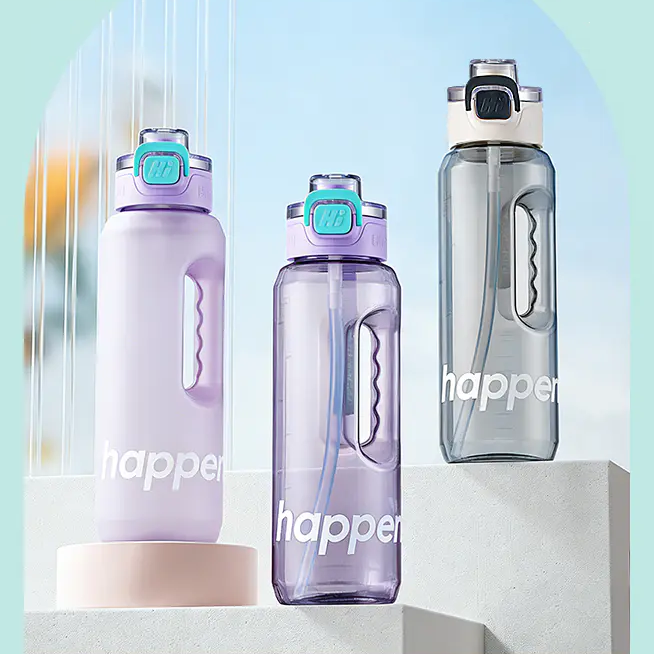
Mid-set hydration should not require stopping, tilting a bottle, and fumbling with a lid while your rest period ticks away. Yet that is exactly what happens with conventional sports bottles when the opening is small, the seal is tight, or the design requires two hands to operate. The frustration is real and the cost is measurable — in training continuity, in hydration consistency, and in the simple irritation of dealing with equipment that was not designed for actual movement. A well-designed Straw Plastic Water Bottle changes this dynamic entirely: accessible with one hand, drinkable without tilting, and structured to fit the pace of a gym session or an outdoor training run without demanding your full attention.
Why Straw Design Matters During Active Training
The Mechanics of One-Handed Drinking
The case for straw-style sports bottles is not complicated. It comes down to what happens when you need water in the middle of movement. During a set of weight training, a cycling interval, or a cardio circuit, bringing a bottle to your lips and tilting it requires a level of attention and body repositioning that a straw eliminates entirely.
A straw mechanism allows the bottle to stay upright. The drinker bends slightly toward the straw or raises the bottle to mouth level without tilting. No flow interruption. No pause to reseal. Just a quick draw and back to the activity. This sounds minor until the alternative is a lid that needs two hands to open, a spout that requires a firm bite-and-release, or a standard opening that spills every time you try to drink without fully stopping.
In high-intensity training specifically — where heart rate is elevated and coordination is partially occupied by the exercise itself — that simplicity has genuine value.
What Makes a Gym Water Bottle Genuinely Functional?
Features That Translate to Real Use
Not every bottle marketed for gym use actually performs well during training. The gap between a product that looks sporty and one that functions well in motion is wider than packaging suggests. A few features separate genuinely useful gym hydration bottles from those that look the part but create friction in use.
Leak-proof performance is the foundation. A bottle that leaks in a gym bag ruins gear. The seal around the straw mechanism and the lid closure both need to hold reliably — not just when new, but after weeks of daily use and repeated opening and closing.
One-handed operation is the point of the design. If the lid requires two hands to open, press, or lock, the straw format loses its core advantage. Flip-top mechanisms that open with a single thumb push, or bite-valve straws that flow on direct suction, both work well. The key is that the action is completable in a single motion while the other hand is occupied.
Grip security during sweaty training. A smooth-sided bottle that slips when hands are wet is a practical hazard. Textured grip zones, shaped bodies that fit a fist naturally, and appropriate bottle diameter all contribute to secure one-handed holding.
Flow rate at the straw matters more than it sounds. A straw with a very narrow bore or a mechanism that restricts flow forces harder suction — tiring over a long session and slower per draw than a well-designed wide-bore straw.
How to Match Bottle Capacity to Your Training Type
Volume Needs Vary by Workout Intensity and Duration
Bottle capacity is one of the more practically important choices in gym bottle selection, and it is often made on the basis of what fits in a bag rather than what the training actually requires.
A few principles that help:
- Short gym sessions under an hour — a moderate-capacity bottle is adequate if refilling is convenient. Many gym facilities have water dispensers, making a smaller bottle practical even for longer sessions
- Long training blocks, outdoor runs, or cycling — larger capacity becomes worthwhile when refill stops would break the training rhythm or when the environment does not offer convenient water access
- High-intensity interval training — hydration needs per session are higher per unit time; a larger bottle reduces how often you need to interrupt a circuit for a refill
- Low-intensity steady-state cardio — hydration needs are more moderate and spaced; a smaller bottle may be entirely sufficient
The physical format matters too. A bottle that fits a treadmill cup holder, clips to a bike frame cage, or slides into a gym bag side pocket without forcing is more likely to be used consistently than one that requires special handling.
Material Safety in Sports Water Bottles
Why BPA-Free Matters and What to Look For
Plastic water bottles used for daily training occupy a sustained thermal and mechanical environment — they are filled with water repeatedly, sometimes with warm or cold liquids, compressed and released in grip, and cleaned frequently. Material quality affects both safety and durability over this kind of use cycle.
BPA (bisphenol A) is a chemical used in certain plastic formulations that has raised health concerns related to hormonal disruption over repeated exposure. BPA-free materials — particularly Tritan copolyester, a widely used option in sports bottle production — have displaced older formulations in most quality sports bottles.
What to check when evaluating material quality:
- Is the bottle clearly labeled BPA-free? Reputable products carry this specification explicitly
- Does the straw material match the body material in safety certification, or is it a lower-grade component on an otherwise certified bottle?
- Does the bottle retain odors after repeated use? Odor retention in plastic suggests either lower material quality or insufficient cleaning practices — both worth understanding before committing to a product for daily use
- Is the lid and straw assembly dishwasher-safe, or does it require hand disassembly and washing to maintain hygiene?
A Plastic Straw Bottle used daily through a training week accumulates residue in the straw bore faster than in the main bottle body. Straw cleaning brushes and dishwasher-safe designs are practical specifications, not cosmetic ones.
Comparing Straw Bottles to Other Sports Bottle Types
Different bottle designs suit different training contexts. Straw-format bottles are not the answer for every situation — but understanding where each type performs well helps match the product to the actual use case.
| Bottle Type | Drinking Mechanism | One-Handed Use | Leak Resistance | Suited For |
|---|---|---|---|---|
| Straw flip-top | Straw through flip lid | Strong | Good | Gym, cycling, general fitness |
| Bite-valve sports bottle | Compressed valve straw | Strong | Good | Running, cycling, team sports |
| Wide-mouth screw cap | Open mouth, tilt required | Weak | Strong (closed) | Hiking, outdoor activities |
| Standard sports cap | Squeeze or bite nozzle | Moderate | Moderate | General gym, weight training |
| Insulated straw bottle | Straw through insulated lid | Strong | Good | Outdoor training, long sessions |
The straw format — whether flip-top or bite-valve — consistently handles one-handed drinking and moderate leak resistance better than wide-mouth or standard cap designs. Where it trades off performance is in insulation (unless the bottle has a double-wall design) and in resistance to very high-pressure drops like squeezing, which some designs handle better than others.
Does Bottle Ergonomics Affect Training Performance?
Small Design Details With Real Practical Impact
Bottle ergonomics — the physical shape and handling characteristics of the bottle — affect whether the product stays in regular use or gets relegated to the back of a cabinet after a few sessions.
A bottle that fits naturally in the hand, can be gripped firmly at the widest point without the fingers feeling spread, and has a cap mechanism that operates reliably when hands are wet will be used consistently. One that requires adjustment mid-workout, has a lid that sticks after a few weeks of use, or develops rattling straw components that are audible during exercise tends to get replaced.
Practical ergonomic considerations for gym users:
- Diameter at the grip zone — should fit comfortably in a standard hand without requiring a wide grip, which fatigues over a long session
- Cap hinge durability — flip-top mechanisms that weaken at the hinge after repeated use become unreliable; hinge design and material quality matter here
- Straw length relative to bottle depth — a straw that does not reach near the base of the bottle leaves water inaccessible when the bottle is tilted during use; a straw that is too long gets in the way
- Bottom stability — a bottle that tips easily when placed on a gym bench or floor is a minor but consistent irritant; wider base designs are more stable in training environments
Cleaning and Long-Term Maintenance
Why Easy Cleaning Determines How Long the Bottle Stays in Use
A bottle that is difficult to clean does not stay clean — it just stops being used. Straw mechanisms are the part that requires the most attention because the bore is narrow, moisture remains after use, and residue from sports drinks or flavored water accumulates faster than in the main bottle body.
Practical cleaning routine for straw sports bottles:
- Disassemble the straw, straw seal, and lid after each use
- Rinse all components immediately with clean water before residue dries
- Use a straw cleaning brush on the bore at least every few days, or after any use with flavored liquid
- Allow all components to air dry fully before reassembly — closed bottles trap moisture and create conditions for odor development
- Deep clean with a diluted vinegar solution or baking soda paste periodically to remove mineral deposits and any residual flavoring
Dishwasher-safe straw and lid components make this routine significantly easier. If a bottle requires full hand disassembly and brush cleaning every use, it will be cleaned inconsistently — which affects hygiene over time.
Choosing the Right Bottle for Different Training Environments
Matching the Product to the Space and Activity
Indoor gym training, outdoor running, and cycling each create different conditions for bottle use, and the right product for one context is not always the right product for another.
Indoor gym:
- Cup holder or cage fit is less critical; a stable flat bottom matters more
- Larger capacity is more practical since refilling mid-session interrupts training
- Dishwasher-safe design matters for post-session convenience
Running:
- Lightweight construction reduces carry burden over distance
- Smaller form factor fits a running vest or hand-carry position
- Squeeze-and-straw or bite-valve designs work better than flip-tops that can catch on clothing or bounce open
Cycling:
- Standard water bottle cage dimensions are worth checking if the bottle needs to mount on a frame
- Squeeze bottles with bite valves are standard for cycling because they allow fast sipping without losing grip on handlebars
- Clear or translucent bodies help gauge remaining volume without stopping
Yoga and low-intensity training:
- Aesthetic and size matter more here; these sessions are lower-sweat and the hydration demands less urgent
- Straw design still adds convenience; leak-proof performance is the higher priority
Sourcing Straw Water Bottles for Distribution or OEM Production
The sports bottle market rewards product quality and design consistency. A bottle that performs well in real training conditions builds loyalty and repeat purchasing in a way that a cheaper alternative with short-term performance problems does not. Taizhou Huangyan Zuohao Plastic Factory manufactures straw-style sports water bottles and related plastic drinkware products for fitness, outdoor, and general active use categories. Their product range covers a variety of capacity formats, straw mechanisms, and material specifications — including BPA-free options — suited to both retail distribution and OEM development for branded product lines. If you are sourcing gym water bottles for wholesale, retail, or custom branding purposes, reaching out to discuss production specifications, capacity options, and minimum order requirements is a practical starting point for building a product range that meets what active users actually look for.
Related Products
We specialize in the production and sales of plastic water cups, and also provide customization services
and comprehensive after-sales support.
QUICK LINKS
CONTACT US
- Address:No. 1 Shuangyou Road, Nancheng Street, Huangyan District, Taishan City, Zhejiang Province
- Tel: +86-19957687783
- Email: [email protected]
- Whatsapp: +86-19957687783
MOBILE
Copyright © Taizhou Huangyan Zuohao Plastic Factory.
All Rights Reserved.
