


 English
 عربى
عربىNews

How Straw Plastic Water Bottle Helps Drink More Water Daily
Adequate daily hydration is widely understood as a health priority, yet a significant portion of people consistently fall short — not from lack of awareness, but from the small friction points that interrupt the habit throughout the day. Forgetting to drink, finding it inconvenient to open a bottle during a meeting, or simply not having water within reach at the right moment all add up quietly. A Straw Plastic Water Bottle addresses these points directly by reducing the effort and attention required to drink — turning what should be a continuous habit into something that happens more naturally across the day.
What Makes a Straw Bottle Different from a Standard Water Bottle
The built-in straw — a flexible tube running from the lid down to the base — lets the user drink without lifting, tilting, or removing a lid. The bottle stays upright on a desk, in a car cup holder, or in a bag pocket while the user sips with almost no movement at all.
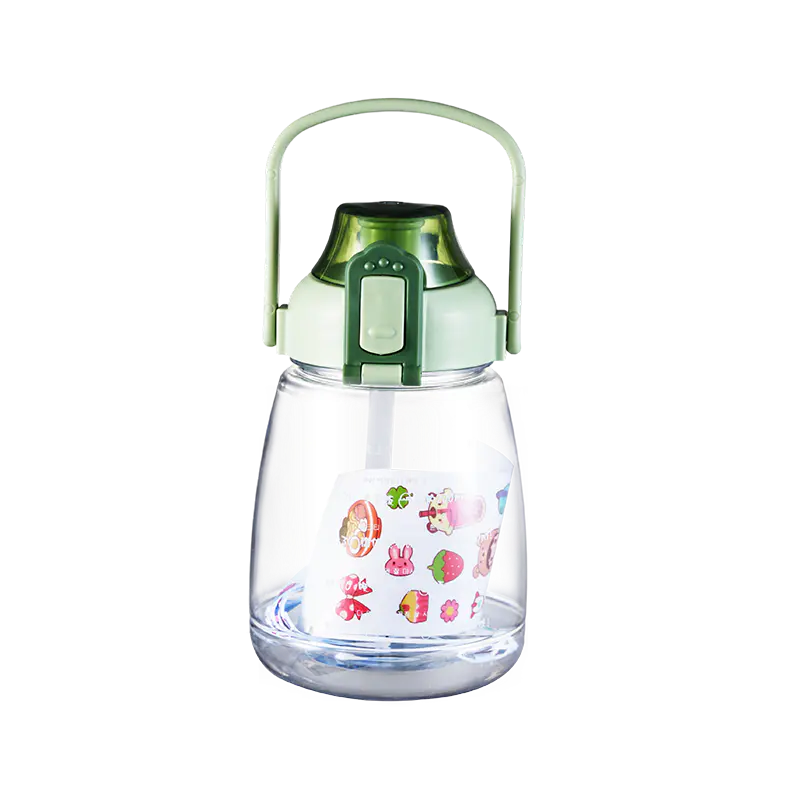
That design difference sounds minor. In practice, it changes how often drinking happens:
- No tilting needed — the bottle stays flat while the user sips
- No cap to remove — drinking starts the moment the straw is in range
- One hand is enough — the bottle stays put; the user just reaches for the straw
- Visible water level — transparent bodies show what remains, which nudges people to keep going
Remove enough small barriers and the behavior changes. That is what the straw format does.
Why Does a Straw Format Help People Drink More Water?
Low Effort, Higher Frequency
When drinking water takes no more thought than shifting slightly in a chair — bottle present, straw accessible, no cap to negotiate — it happens reflexively rather than deliberately. That shift matters more than it sounds.
For people who depend on reminders to stay hydrated, the straw bottle adds something the reminder cannot: it removes the friction between noticing the bottle and actually taking a sip. The bottle on the desk becomes both the cue and the tool.
Drinking Without Interrupting What You Are Doing
A standard bottle requires stopping — or at least pausing — to tilt and drink. A straw bottle does not. Typing, reading, sitting in a meeting, driving — all of these can continue without a break while the user takes a sip. The attention cost of staying hydrated drops close to zero.
That is particularly relevant for people who work long stretches at a desk or who commute regularly. Hydration becomes something that happens alongside the day, not something that competes with it.
The Proximity Effect
There is a well-documented pattern in behavioral research: things within easy reach get used more. A straw bottle sitting on the corner of a desk gets reached for more often than a bottle kept in a bag or across the room — not because of any decision, but simply because the distance is smaller.
For hydration, that proximity creates a kind of passive drinking routine. The bottle is visible. Reaching for it takes a second. The straw does the rest. Over the course of a day, the difference in total intake can be noticeable.
Why Plastic Is a Practical Material Choice for Straw Bottles
Weight and Daily Carry Reality
Plastic straw bottles are considerably lighter than glass or metal equivalents at the same volume. For students, commuters, and people who carry a bag all day, weight is not a minor detail. A bottle that is too heavy gets left behind — which means the hydration benefits the design promises never arrive.
Handling Drops and Daily Wear
A Straw Plastic Water Bottle goes in and out of bags, gets set on desks, sits in car cup holders, and occasionally gets knocked over. Food-grade plastic survives that kind of daily handling. Glass chips and cracks. Metal dents. Plastic keeps going — which matters for a product that needs to be present every day to be useful.
Seeing the Water Level
Clear or semi-transparent plastic lets the user track water intake without thinking about it. Watching the level drop through the day provides a quiet, ongoing signal about whether intake is on track. Some designs add measurement lines on the body for users who want to match their intake against a rough daily target without any extra tracking tools.
What to Confirm About the Material
Food-grade plastic used for water bottles is formulated to avoid migration of unwanted substances into the water under normal use. Buyers sourcing straw bottles for retail or promotional programs should confirm that the material specification meets the food contact safety standards that apply to their target market — this is worth addressing before sampling, not after.
How a Straw Plastic Water Bottle Supports Different Daily Routines
Office and Desk Work
A straw bottle within arm's reach at a workstation does something a reminder app cannot: it removes the step between deciding to drink and actually drinking. Sipping between keystrokes, during a call, or while reading does not require breaking concentration. Over an eight-hour day, those small opportunities add up.
There is also a cognitive angle worth noting. Mild dehydration shows up as reduced concentration and increasing fatigue before thirst signals arrive. A bottle that is easy to drink from throughout the day addresses that risk without asking the user to think about it.
Students and Study Spaces
Classrooms, libraries, and exam rooms often restrict food but permit covered water bottles. A straw bottle with a sealed lid and integrated straw mechanism qualifies as a covered container in a wide range of settings — and it is quieter than unscrewing a cap repeatedly in a quiet room, which matters more than it might seem.
Fitness and Active Use
During exercise, staying hydrated means drinking at regular intervals rather than waiting until thirst kicks in. A straw bottle makes that easy — quick sips during rest periods without setting down equipment, pulling off gloves, or breaking form to angle a bottle.
For gym sessions, outdoor workouts, or group fitness classes, the one-handed accessibility keeps water reachable when both hands and the bulk of the user's attention are elsewhere.
Children and Younger Users
The straw format is intuitive for younger users and reduces the chance of spills compared to open-top cups or tilting bottles. For schools, daycare programs, and children's retail, straw bottles in smaller sizes and bright color options are a straightforward product category with consistent demand.
Design Features That Directly Affect Hydration Performance
Not all straw bottles perform the same way. Design decisions made during manufacturing determine how well the bottle actually supports daily hydration in use.
| Feature | Effect on Hydration Habit | What to Look For |
|---|---|---|
| Straw length and diameter | Affects flow rate and sipping ease | Straw reaches bottle base; comfortable diameter |
| Lid seal quality | Determines leak risk in a bag | Confirmed leak-proof at both lid and straw entry point |
| Straw material | Affects durability and cleaning ease | Food-grade, flexible, replaceable |
| Body transparency | Supports visual intake tracking | Clear or graduated markings during use |
| Mouthpiece design | Affects comfort during extended use | Soft bite tip or smooth edge by preference |
| Bottle capacity | Determines refill frequency | Sized for a meaningful share of daily intake without excess weight |
| Carry mechanism | Affects portability | Handle, carry loop, or slim profile for bag pockets |
What Influences How Often People Actually Use Their Water Bottle
The bottle that gets used is the one that fits into the user's day without asking anything extra. Friction in the design — a lid that resists one-handed opening, a straw that collapses under suction, a seal that leaks in a bag — means the bottle gets left at home or swapped for something simpler.
This matters particularly for buyers developing retail or branded programs. A bottle that users carry daily and actually drink from delivers on the health and habit benefits the product category is supposed to represent. One that gets set aside after the novelty fades is just packaging.
Features that keep people reaching for the bottle:
- Leak-proof performance that holds up reliably — not just initially, but across regular use
- Easy cleaning without specialized tools, for both the bottle and the straw
- Replaceable straw components, so wear on one part does not make the whole bottle disposable
- A size and weight combination that fits how the user actually carries things each day
Plastic Straw Bottles Compared to Glass and Metal Alternatives
Plastic vs Glass
Glass does not impart any taste to the water, which some users notice and prefer. The practical problem for daily carry is weight and breakage risk. A dropped glass bottle on a hard floor is a cleanup problem. For everyday hydration where the bottle goes everywhere the user goes, plastic handles the physical demands of that routine more reliably.
Plastic vs Stainless Steel
Stainless steel holds temperature well — cold water stays cold for longer. The trade-off is weight and opacity. A stainless steel straw bottle is noticeably heavier and shows nothing of the water level inside. For users who care primarily about temperature retention, insulated steel is a reasonable choice. For users who benefit from seeing their intake visually, plastic offers something steel cannot.
Choosing for the Use Context
The answer depends on what the user is actually doing with the bottle. Desk use and daily carry where convenience and visibility matter — plastic works well. Extended outdoor use in warm weather where temperature retention is a real priority — insulated alternatives make more sense. A lot of regular users end up with both.
What Should Buyers Consider When Sourcing Straw Bottles at Volume?
For buyers sourcing at volume — retail, gifting, promotional merchandise, branded programs — the specification conversation needs to happen before sampling, not after. Material certification, straw performance, seal reliability, and available customization options are all easier to address early than to correct once samples arrive. A bottle that looks good in a product photo but leaks in transit, has a straw that collapses on initial use, or uses material that does not clear the safety standards of the target market creates a returns problem and damages the program it was meant to support. Getting those fundamentals locked in through samples before commitment is the straightforward way to avoid that. Taizhou Huangyan Zuohao Plastic Factory. manufactures plastic water bottles including straw bottle formats for retail, promotional, and custom branding programs, with options across sizes, colors, body transparency levels, and lid mechanisms. Material specifications and certifications are available before sampling, and OEM programs with custom color, branding, and packaging are supported. If you are building a straw water bottle product for a retail channel or branded program, the conversation about specification detail before samples go out is where the product outcome gets determined.
Related Products
We specialize in the production and sales of plastic water cups, and also provide customization services
and comprehensive after-sales support.
QUICK LINKS
CONTACT US
- Address:No. 1 Shuangyou Road, Nancheng Street, Huangyan District, Taishan City, Zhejiang Province
- Tel: +86-19957687783
- Email: [email protected]
- Whatsapp: +86-19957687783
MOBILE
Copyright © Taizhou Huangyan Zuohao Plastic Factory.
All Rights Reserved.
