


 English
 عربى
عربى
How Can a PP Plastic Water Bottle Support Repeated Refilling
Refilling a water bottle sounds like a simple daily habit, but the experience can change quite a bit depending on how the bottle is actually designed. A bottle used repeatedly needs to fit naturally into the user's routine, from opening and filling to drinking, washing, carrying, and storing it away again for tomorrow morning.
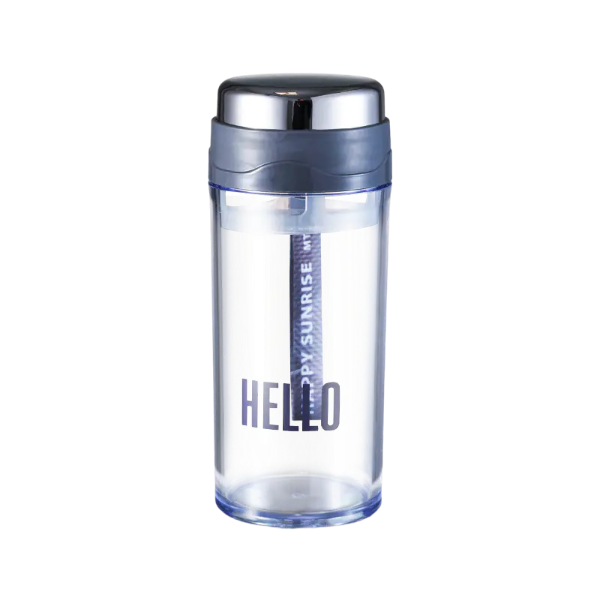
A PP Plastic Water Bottle can be designed around this repeated-use pattern, rather than treating each filling as an isolated action happening in a vacuum. The material, bottle shape, opening, lid, and drinking method all influence how easily the bottle can move through the same routine again and again over a week. This matters because reusable bottles often get handled many times during an ordinary day, since a person may fill one before leaving home, refill it at work by the water cooler, wash it after use, and prepare it again for the following morning. A Water Bottle Plastic with Straw offers another approach here by letting users drink without repeatedly removing a large lid, and a Straw Plastic Bottle can therefore change the relationship between drinking and refilling, especially for people who keep water nearby throughout the day at a desk.
Why Does Refill Frequency Matter for Water Bottle Design?
Repeated refilling changes the demands placed on a bottle over time. The user isn't simply looking for a container that can hold water, but for something that can move smoothly through several recurring actions without becoming a chore.
Opening, filling, closing, drinking, emptying, and cleaning can become part of one continuous routine that repeats daily. If any of these steps feels inconvenient, the user may be a lot less willing to keep using the bottle regularly, even if it looked appealing on a store shelf. A reusable bottle therefore needs to fit the rhythm of daily life rather than fighting against it.
Several everyday actions can influence how naturally a bottle supports frequent refilling.
| Daily Action | Design Consideration |
| Filling | Opening should be easy to access |
| Drinking | Drinking method should suit the user |
| Carrying | Shape should be comfortable to handle |
| Emptying | Bottle should be easy to rinse |
| Cleaning | Components should be practical to wash |
| Storing | Shape and lid should suit regular storage |
The importance of each feature can vary quite a bit between users. Someone at a desk may refill the bottle near a water dispenser down the hall, while an active user may fill it before leaving home and again during outdoor activities later in the day. This difference makes refillability a practical design question, rather than a single product feature checked off a list. The bottle needs to work within the environment where people actually use it, not some idealized setting.
How Does the Bottle Opening Affect Repeated Refilling?
The opening is one of the most frequently handled parts of a reusable bottle, touched every single time someone tops it off. Every refill requires the user to access it, so the shape and placement of the opening can influence the overall experience quite a bit.
A narrow opening may provide a genuinely different filling and cleaning experience from a wider one under a kitchen faucet. The choice can also affect how easily users can see inside the bottle when checking its condition before a refill. A practical opening should make ordinary filling straightforward without creating unnecessary handling steps along the way. It should also work naturally with the way the bottle gets cleaned after use each evening.
| Opening Consideration | Refill-Related Role |
| Easy access | Makes frequent filling more convenient |
| Clear interior access | Helps users inspect the bottle |
| Suitable lid connection | Supports repeated opening and closing |
| Practical cleaning access | Makes routine washing easier |
| Secure closure | Helps keep the bottle closed during carrying |
The opening also interacts with the rest of the bottle design in ways easy to overlook. A well-positioned opening may be easy to reach under a sink faucet, while an awkwardly placed one can make filling feel a lot less natural. For manufacturers, this means the opening should get considered as part of the complete refill routine, not simply a hole through which water happens to enter.
Can a Straw Design Work With Frequent Refilling?
A straw changes the way users drink from a bottle, but it doesn't remove the need for regular refilling at all. In fact, easy sipping can become particularly relevant for users who drink from the same bottle throughout an entire workday.
A Water Bottle Plastic with Straw allows users to access water without lifting and tilting the entire container the way some conventional bottles require. This can be convenient at a desk between meetings, during light activity, while traveling on a train, or when the bottle sits in a cupholder. The drinking system also changes how the lid gets handled during a typical day. If the straw remains connected to the lid, the user may only need to open the main closure when refilling, which separates the drinking action from the filling action and can make each part of the routine more predictable.
| Usage Moment | Straw Bottle Experience |
| Drinking at a desk | Allows direct sipping |
| During travel | Reduces the need to tilt the bottle |
| During exercise | Provides convenient access to water |
| During refilling | Main opening remains available |
| Between uses | Lid and straw can be cleaned as part of the bottle |
The straw does introduce another component that needs attention during cleaning, one easy to forget about in a rush. Its internal path should therefore get considered when evaluating the bottle for repeated use over months. A Straw Plastic Bottle can be convenient for frequent drinking, but its long-term usefulness depends on how easily the complete drinking system can be maintained week after week.
How Does Cleaning Influence Repeated Refilling?
Cleaning becomes a lot more important as refill frequency increases across a busy week. A bottle used repeatedly comes into contact with water, air, hands, and the surrounding environment, so routine washing becomes part of its normal lifecycle rather than an occasional chore.
The bottle body is only one part of the cleaning process worth thinking about. The lid, straw, sealing areas, and other removable components may also need attention depending on the product design in question. A simple cleaning routine is a lot easier to maintain when the different parts can be accessed without unnecessary difficulty at the sink.
| Bottle Area | Cleaning Consideration |
| Bottle body | Should be easy to rinse |
| Lid | Needs practical access |
| Straw | Requires attention to its inner path |
| Seal area | Should be accessible for routine cleaning |
| Connection points | Need regular inspection |
The design should support ordinary care, rather than making cleaning feel like a separate weekend project. When users can understand how the components fit together at a glance, routine maintenance becomes a lot easier to fold into daily habits. This is especially relevant for bottles with straws attached to the lid. The drinking system can provide convenient access to water, but users should also be able to clean the parts that come into contact with the drink itself.
What Role Does the Lid Play in Repeated Bottle Use?
The lid connects several parts of the refill routine into one continuous action. It needs to open when the bottle is filled, close after filling, and remain practical during repeated handling throughout a long day.
Different users may prefer different lid arrangements depending on their habits. Some may want a simple screw closure they can trust, while others may prefer a lid connected to a straw or another drinking feature for convenience. The key consideration is how the lid fits the complete use cycle from morning to night. A lid that's easy to open can make refilling more convenient, but it also needs to remain practical when the bottle gets carried between locations like a car and an office desk.
The relationship between the lid and bottle opening can influence both handling and cleaning at the same time. For a PP Plastic Water Bottle, the lid should also work with the bottle's intended use environment, since a bottle kept on a desk may get handled quite differently from one carried in a school bag or used during outdoor activities on a weekend. The more frequently the bottle gets opened and closed, the more important this everyday interaction becomes. Users should be able to understand the opening and closing action without having to think about it each time they reach for it.
How Can Bottle Shape Support Frequent Daily Use?
Bottle shape affects a lot more than appearance sitting on a shelf. It influences how users grip the bottle, where they place it, how they fill it, and how easily they can clean and store it away afterward.
A shape that fits comfortably into the user's routine may encourage continued use without much thought. A bottle that's awkward to hold or difficult to place in common storage areas can become inconvenient even if its basic function remains perfectly fine underneath. This is why refillability should get considered alongside handling, not treated as a separate concern entirely.
| Shape Consideration | Everyday Effect |
| Grip area | Influences how the bottle is held |
| Base shape | Affects placement on surfaces |
| Body width | Changes carrying and storage experience |
| Bottle height | Influences access to filling areas |
| Surface form | Can affect handling when wet |
The intended user also matters quite a bit here. A student may carry the bottle between classrooms all day, while an office worker may leave it beside a computer for much of an afternoon without moving it once. A reusable bottle can serve both situations reasonably well, but the design needs to accommodate the different ways users actually interact with it in practice. For manufacturers, understanding these daily movements can help connect bottle shape with actual refill behavior, instead of focusing only on appearance photographed for a catalog.
How Does Material Choice Relate to a Bottle's Product Lifecycle?
Material choice is part of the wider product lifecycle a bottle goes through. A bottle intended for repeated use needs consideration from the point of manufacture through everyday handling, cleaning, storage, and eventual replacement years later.
A PP Plastic Water Bottle can be designed around repeated everyday use, but the final experience depends on the complete product construction working together. The bottle body, lid, straw, seals, and other parts all contribute to how the product gets handled over time, not just on day one. The material should therefore get considered together with the intended use it's actually meant for.
A bottle used regularly may experience repeated washing, carrying, opening, closing, and contact with different environments across seasons. These activities can gradually affect the condition of the product, making practical maintenance part of responsible use rather than an afterthought. Users should follow the care instructions provided for their specific bottle model. Replacing a component or the bottle itself may also become appropriate once its condition no longer supports normal use comfortably.
Product lifecycle thinking helps move the discussion beyond simply asking whether a bottle can be refilled at all. It asks how well the entire design fits the repeated routine surrounding each and every refill.
Can Repeated Refilling Influence Product Development?
Frequent refilling gives manufacturers genuinely useful insight into how people actually interact with reusable drinkware day to day. The important details are often found in ordinary actions, rather than unusual situations dreamed up in a design meeting.
A user notices whether the lid opens easily when the bottle is empty and sitting on a counter. They notice whether the opening is convenient when adding water from a tap. They also notice how simple it is to clean the bottle after several uses stack up over a few days.
These experiences can influence future product development in real ways.
| User Experience | Possible Development Focus |
| Frequent opening | Easier lid handling |
| Regular refilling | Practical opening design |
| Repeated washing | Accessible components |
| Daily carrying | Comfortable bottle shape |
| Straw use | Easier straw maintenance |
| Long-term storage | Convenient overall form |
The goal isn't adding more features simply because they're available to slap onto a product. Each design decision should have a clear relationship with how the bottle will actually get used in someone's kitchen or gym bag. A Straw Plastic Bottle may prioritize easy drinking above all else, while another reusable bottle may focus on a simpler opening and cleaning routine instead. Different designs can support different refill habits without requiring every product to follow the exact same structure.
How Can Manufacturers Design for Refill Habits Rather Than Occasional Use?
Designing for repeated refilling requires attention to the entire user journey, not just the moment of purchase. The bottle needs to make sense when it's filled in the morning, carried during the day, opened repeatedly, washed later that evening, and prepared for another use the next day.
This approach can change how manufacturers evaluate individual components on a design review. The opening, lid, straw, bottle body, and cleaning access should get considered as connected parts of one routine, rather than separate boxes to check. A practical development process may examine several things at once.
- Where the bottle is normally filled.
- How often users are likely to open it.
- How users prefer to drink.
- Which parts need regular cleaning.
- How the bottle is carried and stored.
- How users recognize when maintenance or replacement is needed.
This perspective helps distinguish between occasional-use features and details that matter during repeated daily handling week after week. It also gives manufacturers a clearer way to connect product design with real user behavior observed in actual homes and offices. For users, refillability is ultimately about a lot more than adding water to an empty container once. It depends on whether the bottle remains convenient to open, drink from, clean, carry, and prepare for the next refill as part of an ordinary routine that repeats itself without much friction.
Related Products
We specialize in the production and sales of plastic water cups, and also provide customization services
and comprehensive after-sales support.
QUICK LINKS
CONTACT US
- Address:No. 1 Shuangyou Road, Nancheng Street, Huangyan District, Taishan City, Zhejiang Province
- Tel: +86-19957687783
- Email: [email protected]
- Whatsapp: +86-19957687783
MOBILE
Copyright © Taizhou Huangyan Zuohao Plastic Factory.
All Rights Reserved.
